Visit Rhodes: between history, spirituality and Mediterranean heritage
To visit Rhodes is to plunge into an island shaped by civilizations, beliefs and the Aegean Sea. Every stone, every alleyway bears the traces of an exceptional past. From the medieval center to the hilltop monasteries, history and spirituality blend harmoniously.
The historic center to discover Rhodes and its medieval past
The historic center of Rhodes, a UNESCO World Heritage Site, is one of the jewels of the Mediterranean. Surrounded by imposing ramparts, the old town retains its medieval atmosphere while remaining a lively place. As you stroll through its cobbled streets, you’ll feel the island’s past grandeur with every step you take.
Rue des Chevaliers, lined with Gothic buildings and restored houses, then embodies the era of the Hospitaliers de Saint-Jean. These knights left a lasting mark on the island in the Middle Ages. Engraved coats of arms in every arcade are a reminder of their presence and power.
Not far away, the Palace of the Grand Masters proudly dominates the city. Carefully restored, it now houses a museum where ancient sculptures, mosaics and frescoes meet. The panoramic view of the Aegean Sea from its ramparts is nothing short of spectacular.
To complete the visit, the Jewish quarter reveals another facet of Rhodes. The Kahal Shalom synagogue, still in use today, underlines the island’s cultural diversity. Its frescoes and inscriptions tell the story of a community that has been present since the 15th century.
Tip: in the morning, the light softens the blond stones of the old town, creating the perfect backdrop for photos or a coffee break on the terrace.
Must-see spiritual sites in Rhodes
Rhodes is more than just its ramparts: it’s also home to a spiritual soul deeply rooted in Greek tradition. Its monasteries and sanctuaries, often perched on hilltops, offer panoramic views and moments of peace.
Tsambika monastery
Perched on a hill in the east of the island, the Tsambika monastery is dedicated to the Virgin Mary. Every year, the monastery attracts the faithful who come to pray for fertility and family. The 314-step ascent then offers breathtaking views of Tsambika beach and the Aegean Sea. This place, both spiritual and panoramic, is a must-see when visiting Rhodes.
The monastery of Filerimos
Located on the mountain of the same name, the monastery of Filerimos embodies serenity. Its 14th-century church, surrounded by cypress trees and shady paths, offers a haven of silence. Here, we discover ancient icons and the famous “Iron Cross” dominating the landscape. The climb up to the cross, punctuated by frescoes depicting the Passion of Christ, creates an atmosphere that is both mystical and contemplative.
Butterfly Valley
The Valley of the Butterflies (Petaloudes) is one of Rhodes’ most magical natural sites. Between June and September, thousands of butterflies grace the wooded paths. This spiritual and ecological site symbolizes the harmonious cohabitation of man and nature. There are also several Byzantine chapels, such as that of the Holy Cross.
The monastery of Saint-Jean-le-Théologien
Founded in the 11th century, this Byzantine monastery near the town of Rhodes remains a place of peace and contemplation. Visitors can admire its ancient frescoes and enjoy a breathtaking view of the Aegean Sea. This peaceful atmosphere makes it an ideal stopover for those wishing to visit Rhodes in a different way, away from the hustle and bustle of tourism.
The Church of Panagia in Lindos
In the heart of the white village of Lindos, the Church of Panagia remains a marvel of Byzantine art. Its frescoes depict the life of Christ with remarkable finesse. This still-active place of worship reflects the religious fervor of its inhabitants and the cultural richness of Rhodes.
Other historical treasures to explore Rhodes
Rhodes also abounds in ancient sites that bear witness to its major role in Greek history.
The remains of Kamiros
Located on the west coast, Kamiros was one of the island’s three founding cities. Its well-preserved ruins offer a glimpse of daily life in Hellenistic times. Temples, agora and houses open onto a spectacular view of the Aegean Sea, making the visit both cultural and contemplative.
Kalithea Spa
The Thermal Baths of Kalithea, restored in their neoclassical style, offer the perfect balance between history and relaxation. This mythical site, famous for its curative springs, allows visitors to stroll through elegant gardens and enjoy natural pools. An ideal place to recharge one’s batteries, it evokes the tradition of Mediterranean well-being.
To visit Rhodes is to travel back in time. Between medieval ramparts, Byzantine monasteries and golden beaches, the island reveals a face that is both spiritual and alive. Each site tells a part of its thousand-year-old history, and each visitor leaves with a different emotion.
Visit Rhodes: the beaches to discover between sun and golden sand
Rhodes’ beaches are among the most beautiful in the Aegean. Each one has its own atmosphere and appeals to a different audience.
Faliraki: a beach to discover during a stay in Rhodes
Faliraki is one of Rhodes’ most famous beaches. Ideal for those seeking a festive atmosphere, it abounds in water sports activities such as jet-skiing and windsurfing. Seaside bars and restaurants ensure a lively atmosphere, while at night the beach transforms into a party mecca for young travelers.
Tsambika: an ideal beach for discovering Rhodes with your family
Tsambika, nestled between two green hills, is perfect for families and visitors in search of serenity. Its golden sands and crystal-clear waters create a soothing backdrop. The shallow water reassures parents, and the view of the Tsambika monastery, perched on the hill, adds a picturesque touch to this peaceful beach.
Prasonisi: a unique place to explore southern Rhodes
At the island’s southernmost point, Prasonisi attracts water sports enthusiasts. This is where the Aegean Sea meets the Mediterranean, creating perfect conditions for kitesurfing and windsurfing. Although more isolated, this beach impresses with its wild beauty and endless panoramas.
Anthony Quinn Bay: a must-see when visiting Rhodes
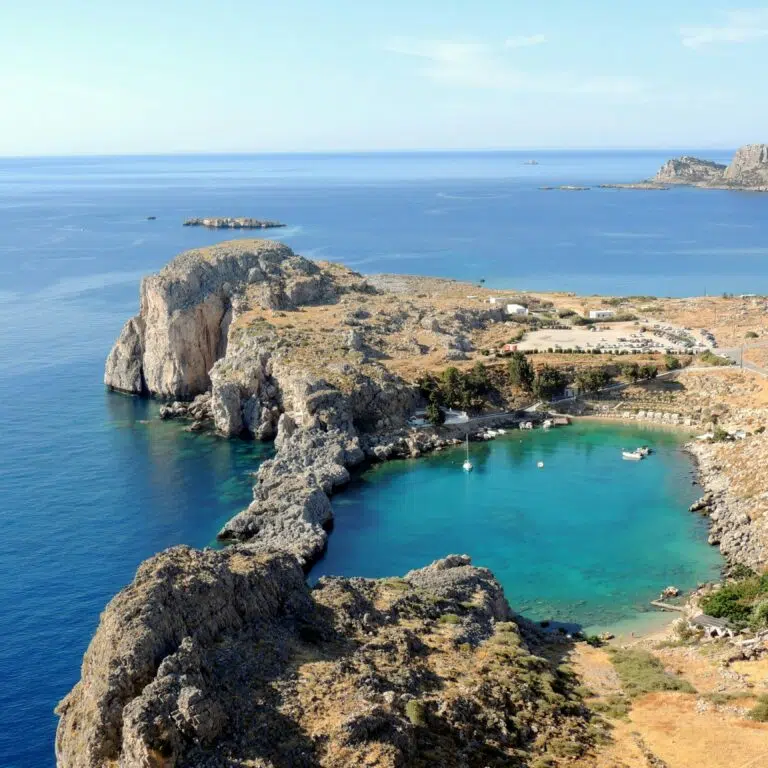
Anthony Quinn Bay offers an intimate, romantic atmosphere. Surrounded by pine trees and cliffs, its turquoise waters and unspoilt setting make it an enchanting destination. It’s an ideal spot for swimming, relaxing and snorkeling, thanks to its rich seabed and peaceful atmosphere.
Visiting Rhodes also means savoring the diversity of its beaches: festive, family-friendly or wild, each one reveals a unique face of the island.
Rhodesian cuisine: a blend of traditions and flavours
A visit to Rhodes also means discovering a cuisine that blends tradition, Eastern influences and Mediterranean spirit. The island’s gastronomy reflects its rich history, inherited from the Greek, Italian and Ottoman civilizations. Local products such as olive oil, wild herbs, honey, cheese and vegetables play an essential role in every dish. Thanks to their freshness and authenticity, every meal becomes a true celebration of taste.
Local specialities to discover on a stay in Rhodes
Rhodian cuisine is distinguished by its simple yet tasty recipes. Pitaroudia, a deep-fried chickpea patty, is one of the most popular specialties. Served hot, often accompanied by yoghurt or fresh vegetables, it offers a light texture and a subtly spicy flavor.
Another must-try is souvlaki, which features marinated pieces of meat grilled on skewers and served with pita bread and crunchy vegetables. These dishes are then accompanied by yoghurt, lemon and herb sauces, adding freshness and character. Local taverns also offer vegetarian variants and fish dishes grilled to perfection.
Tip: for an authentic taste of local cuisine, choose family-run taverns outside the tourist areas.
Local wines: a different way to discover Rhodes
Rhodes has a wine-growing tradition that goes back thousands of years. Wine lovers will particularly appreciate the vintages of theEmbona region, known for its high-altitude vineyards. Native grape varieties such as Athiri (white) and Mandilaria (red) produce well-balanced wines that are both fresh and expressive.
These wines go perfectly with seafood, grilled meats or lightly spiced dishes. For the full experience, a visit to Rhodes also includes a tour of the local wine cellars: some offer tastings accompanied by cheese and typical mezzés.
Mandraki: the ideal place to discover Rhodes gastronomy
In Rhodes town, the Mandraki district concentrates the island’s gastronomic energy. This lively area, just a stone’s throw from the port, is packed with elegant bars, taverns and restaurants. Here, you can enjoy traditional dishes with a twist, as well as modern creations inspired by local produce.
After a day of discovery, Mandraki becomes the ideal setting for a terrace dinner. Here, visitors enjoy a glass of Athiri wine or a honeyed dessert, facing the lights of the port and the gentle bustle of the evening.
A visit to Rhodes is also a taste of its culinary identity: a subtle blend of sea, land and memory.
Outdoor activities and adventures on Rhodes
Visiting Rhodes also means discovering its wild nature. Between mountains, forests and the Aegean Sea, the island offers an ideal playground for adventure lovers. Hiking, kayaking, scuba diving or a trip to the sea: each activity allows you to discover a different face of Rhodes, between authenticity and a change of scenery.
Profitis Ilias: the ideal way to explore Rhodes
Mount Profitis Ilias, at 798 meters, is one of Rhodes’ best hiking sites. The trail winds through pine forests before offering spectacular views of the Aegean Sea. Along the way, you come across the former Elafos Hotel, an elegant 1930s building, and a little higher up, the Profitis Ilias monastery, perched in tranquility. The climb requires a little effort, but the panoramic reward is well worth it.
Filerimos: accessible hiking to discover Rhodes
Less demanding but just as beautiful, the hike up Mount Filerimos combines nature and culture. Situated at an altitude of 400 metres, this site is home to a 14th-century monastery surrounded by peaceful gardens. Visitors can follow the Golgotha path, dotted with small chapels, to a large stone cross that dominates the island. It offers one of the most soothing views of Rhodes’ northwest coast.
Butterfly Valley: a nature site to see when visiting Rhodes
Located near the village of Theologos, the Valley of the Butterflies(Petaloudes) is one of Rhodes’ most emblematic natural sites. Every summer, from June to September, thousands of Callimorpha quadripunctaria butterflies gather here, attracted by the cool, lush vegetation.
Visitors can follow shady paths across streams, wooden bridges and waterfalls. A true haven of peace, this site is ideal for gentle hikers and photographers. To preserve this fragile ecosystem, it is essential to avoid loud noises and to avoid touching insects.
Kayak and paddle: an active way to explore Rhodes
Exploring Rhodes’ coastline by kayak or paddle offers a different perspective on the island. From the beaches of Faliraki or Lindos, you can reach secret coves and sea caves of striking beauty. These excursions are often made in the morning, when the sea is calm and the light soft. It’s the ideal way to combine sport, nature and relaxation.
Symi: a must-see excursion to discover Rhodes in a different way
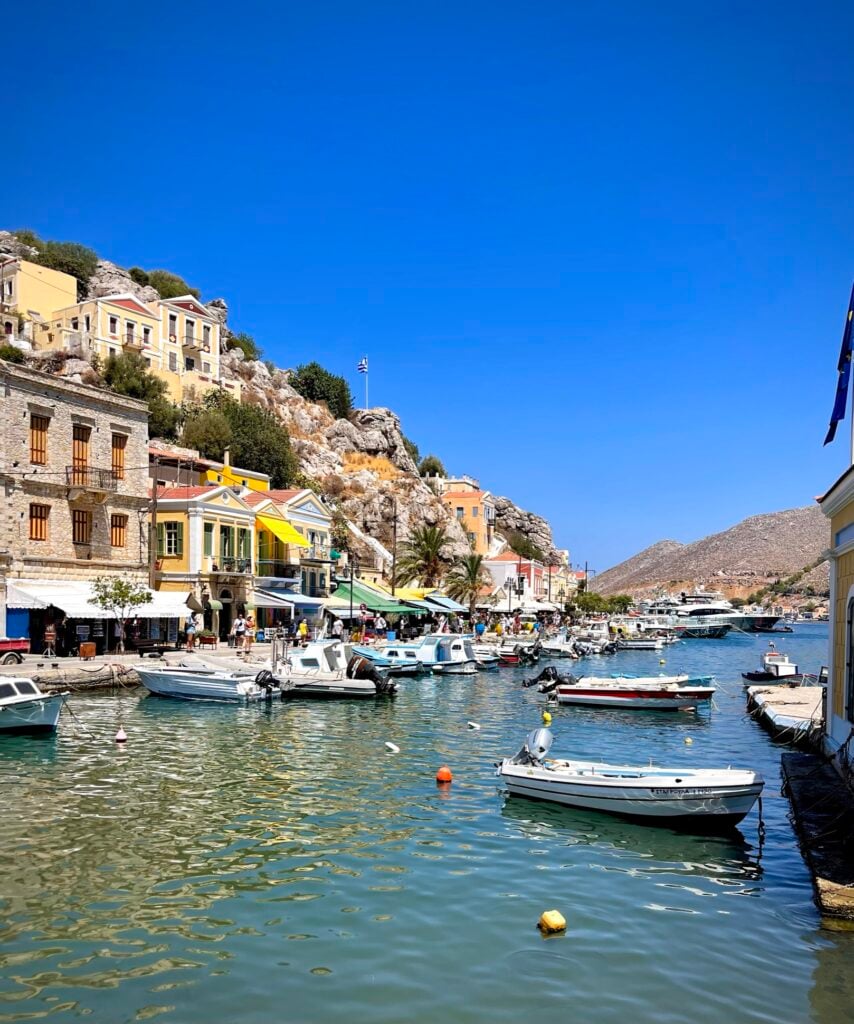
Less than an hour’s sail from the port of Mandraki, the island of Symi has a picturesque charm all of its own. Its colorful houses, crystal-clear waters and peaceful atmosphere contrast with the hustle and bustle of Rhodes. The visit then often includes a stop at the Panormitis monastery, one of the most famous in the Dodecanese. It’s the perfect way to discover another facet of the Aegean.
Kalithea Springs: an ideal spot to explore Rhodes underwater
Kalithea Springs, a restored former spa resort, now attracts diving and snorkeling enthusiasts. Its translucent waters reveal a variety of marine life and spectacular rocky bottoms. The resort, 10 km from Rhodes town, combines relaxation, swimming and underwater exploration. Visitors can also enjoy a coffee on one of the terraces between dives.
What to bring back from Rhodes
Rhodes is a veritable center of craft creations, where tradition and modernity blend harmoniously. Local craftsmanship reflects the island’s rich cultural heritage, offering visitors a multitude of unique products to take home. Whether you’re looking for authentic souvenirs or original gifts, Rhodes has something for everyone.
Painted ceramics: a craft to discover in Rhodes
In the old town of Rhodes, numerous stores sell handmade ceramics. These pieces, often decorated with traditional Greek motifs, are made locally using techniques handed down from generation to generation. Each pot, plate or vase represents a piece of the island’s history, adding a Mediterranean touch to your home.
Traditional embroidery: a skill to be seen in Rhodes
Rhodes embroidery, handmade by local craftsmen, is a veritable treasure trove of craftsmanship. The fabrics, often colorful and delicately worked, are used to make tablecloths, cushions, garments and various accessories. These handcrafted pieces then become perfect souvenirs for those wishing to take home a piece of the art of traditional weaving.
Unique jewelry: local creations to discover in Rhodes
The island of Rhodes is also famous for its handmade jewelry, especially silver and gold creations. Local jewelers use motifs inspired by Greek history and culture, resulting in elegant, authentic pieces. Whether you’re looking for an engraved ring, silver bracelets or delicate pendants, you’ll find jewelry that’s perfect as a souvenir or gift.
Rue Socrate: the ideal street for shopping in Rhodes
This lively street, in the heart of the old town, is packed with colorful stores. You’ll find not only local handicrafts, but also unique objects by Greek artists. The street then becomes the perfect place to stroll and discover handmade creations that capture the essence of Rhodes.
Gourmet products: local flavours to discover Rhodes
Rhodes’ markets are a paradise for lovers of local cuisine. Perfumed honey, harvested in the island’s mountains, is a must. Tasty olives and aromatic herbs, such as oregano and thyme, bring the flavours of Mediterranean cuisine right home. Finally, you’ll find top-quality olive oils from the island’s olive groves, ideal for your dishes or gifts.
Where to stay in Rhodes: choosing the right area for your stay
Rhodes offers several very different areas, each with its own atmosphere, rhythm and advantages. Choosing the right area transforms your stay, as you gain in comfort, time and pleasure. Here are the most suitable locations for your travel style.
Rhodes-ville: an ideal district in which to discover Rhodes
Rhodes-City is ideal for travelers who want to do it all on foot: museums, the medieval old town, the port of Mandraki, restaurants and urban beaches. Buses and cabs leave from here, making excursions to the whole island easy. The atmosphere remains lively in the evenings, especially near Mandraki and the city walls. Hotels range from simple to top-of-the-range, and everything is within easy reach.
Old town: an authentic place to visit Rhodes
Sleeping in the Old Town offers a total immersion in history. The cobbled streets, stone houses and flower-filled patios create an intense atmosphere. Small hotels and guesthouses allow you to experience Rhodes like a local, with quiet evenings and a remarkable medieval setting.
However, the narrow streets limit access by car. Vehicles are often parked outside the city walls.
East coast: a good choice for discovering Rhodes on the beach
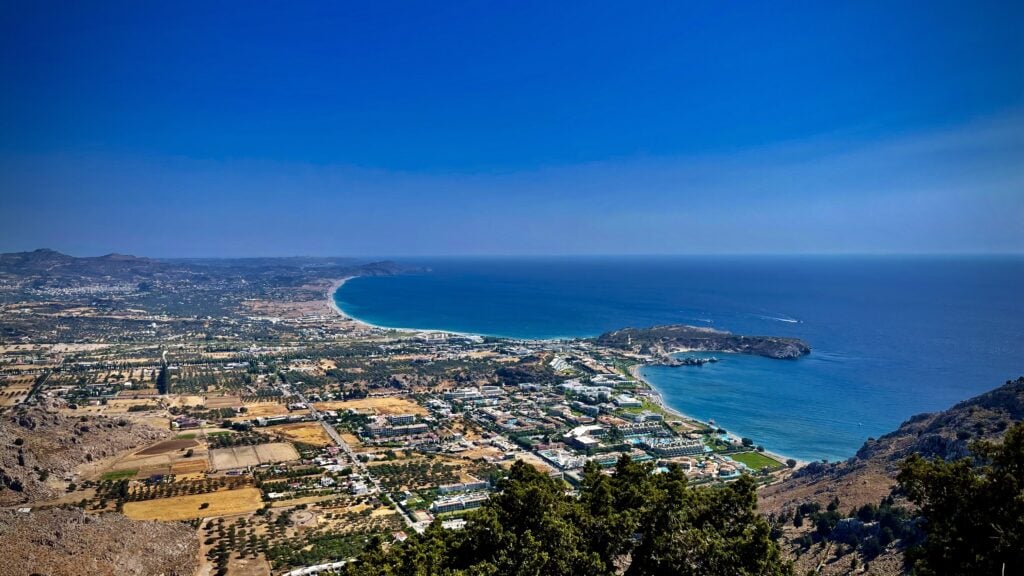
The east coast is home to the most beautiful and easily accessible beaches: Faliraki, Kolymbia, Afandou and Tsambika. The climate is milder than in the north, and the sea is often calm. Beach hotels offer swimming pools, restaurants, water sports activities and private beaches.
Faliraki attracts more young people and remains very lively, while Kolymbia and Afandou offer a more tranquil setting.
Lindos: an emblematic village to explore on a Rhodes holiday
Lindos remains one of the most emblematic places on Rhodes. The white village, perched Acropolis and azure-blue coves create a spectacular backdrop. Hotels blend into the narrow streets, and some offer unforgettable panoramic terraces.
Traffic is difficult in summer, and parking lots are located at the entrance to the village. So explore on foot.
Southern Rhodes: an area to discover for its peace and nature
The further you descend towards Gennadi, Kiotari or Prasonisi, the wilder the landscape becomes. Beaches stretch for miles, hotels are spaced out and nature dominates. Prasonisi creates a unique setting where two seas meet. It’s the perfect place for those seeking a more leisurely pace, or for kitesurfing enthusiasts.
Inland villages: an authentic way to discover Rhodes
Rhodes has a rich hinterland, often overlooked by visitors. Villages such as Embonas, Apollona and Sianna offer a different experience. Then there are family-run tavernas, vineyards, craft workshops and an authentic atmosphere. Accommodation is simple but welcoming, perfect for discovering local life.
Mistakes to avoid when traveling to Rhodes
Rhodes offers a wide variety of landscapes, villages and historic sites. However, there are a number of mistakes that can spoil part of your stay. Here’s what you need to know to make the most of the island without any nasty surprises.
Climb the Lindos Acropolis in the hottest hours of the day
The climb up to the Acropolis offers splendid panoramic views, but it can be a grueling experience in summer. Between 11 a.m. and 4 p.m., the heat becomes intense and the narrow streets offer almost no shade.
Choose early morning or late afternoon to enjoy the site without excessive fatigue.
Thinking that Butterfly Valley is interesting all year round
Butterfly Valley attracts visitors between June and September. Out of season, the site retains its natural charm, but the butterflies are no longer present. Plan a visit in summer to enjoy the show, or choose another site outside this period.
Underestimating the distance to the south of the island
Rhodes seems compact, but journeys to Prasonisi, Gennadi or Kiotari take longer than expected. The roads are still good, but the distances make some days longer.
Having a car makes it easier to get around and enjoy the southern beaches without running.
Parking in Rhodes old town
Medieval alleyways were not designed for modern traffic. As a result, zones are regulated, and checks are frequent. It’s best to park outside the ramparts, where convenient parking lots provide quick access to the center.
Choose Faliraki for a quiet summer holiday
Faliraki offers long beaches and plenty of activities, but the atmosphere becomes very lively in high season. For a peaceful stay, it’s best to opt for Kolymbia, Afandou or the villages to the south.
Faliraki remains ideal for those who enjoy a lively atmosphere.
Looking for quiet beaches in the middle of the afternoon
Even the most discreet coves fill up after 11 a.m. in summer. To enjoy the calm scenery and soft light, it’s best to come early in the morning or at the end of the day. This is when Rhodes reveals its most beautiful colors.
Underestimating the wind in the south of the island
Prasonisi seduces with its unique landscape, but the wind blows hard almost every day. The sand flies, the air is full of iodine and the atmosphere remains sporty. The place is perfect for kitesurfing, less so for a day of sunbathing.
Drinking too little water when hiking
The paths to Filerimos or Profitis Ilias offer beautiful views, but the heat rises quickly. Water sources are still rare, and the trails don’t have much shade. Always carry plenty of water to avoid fatigue.
What to do in Rhodes according to your travel style
Rhodes has something for everyone. Quiet beaches, white villages, panoramic views, medieval streets, nature activities… The island offers the ideal playground for imagining a unique stay. Here are some simple ideas, designed to suit the way you travel.
A different way to discover Rhodes
If you like to understand the soul of a place, Rhodes has something for you.
- Explore the UNESCO-listed medieval old town.
- Take a stroll down Rue des Chevaliers, a Gothic setting guaranteed.
- Visit the Palace of the Grand Masters and its mosaics.
- Discover the Jewish Quarter and the Kahal Shalom synagogue.
- Finish with the Acropolis of Lindos and its views over the bay.
This style of stay is best enjoyed at leisure, between coffee breaks on the terrace and museums.
Travel as a couple: the best places to visit in Rhodes for two
Rhodes naturally creates a gentle ambience.
- Anthony Quinn Bay at sunrise or sunset.
- Dinner in the white streets of Lindos.
- Walk to Monte Smith to admire the illuminated sea.
- Mandraki terraces for a peaceful evening.
With its setting of sea and stone, the island is the perfect setting for two.
Family travel: activities to discover Rhodes with children
Families quickly find their feet in Rhodes.
- East coast: calm sea, Tsambika beach ideal for children.
- Faliraki: a variety of water sports and a friendly atmosphere.
- Butterfly Valley: shady walk and natural show (June-September).
- Old town: easy to explore, accessible to all.
The pace is set naturally by swimming, light sightseeing and artisanal ice creams.
Nature: the best places to explore Rhodes in the great outdoors
If you like to walk or get away from it all:
- Mount Profitis Ilias: pine forests and spectacular panoramas.
- Mount Filerimos: Golgotha trail, chapels and large stone cross.
- Kalithea Springs: snorkeling in clear waters.
- Villages of Embonas and Sianna: vineyards, taverns and traditions.
The interior of Rhodes reveals a more authentic and calmer face.
Short break: the essentials for visiting Rhodes in a short time
For two or three days on the island:
- Medieval old town on the first day.
- Lindos and its bay on the second day.
- An iconic beach or Kalithea Springs the third.
Rhodes-City or Kolymbia are the most convenient starting points.
Off-season: a great time to discover Rhodes in style
Rhodes remains magnificent when the crowds dissipate.
- April-May and September-November: ideal climate, peaceful atmosphere.
- Old town: quieter alleys and more authentic encounters.
- Hiking: perfect conditions, green landscapes.
- Beaches: mild atmosphere, even if the water cools off a little in November.
Another face of the island is revealed, more intimate and more local.
When to visit Rhodes: events and best times
Rhodes, rich in cultural events, is a lively destination that attracts visitors all year round. Each season presents its own charms and opportunities to explore the island. Whether you’re a festival-goer, history buff or simply looking to relax, Rhodes offers a unique experience with every visit.
Cultural calendar: events in Rhodes
Rhodes is a dynamic island, offering a multitude ofcultural events throughout the year. Here is a selection of notable festivals:
- Rhodes Medieval Rose Festival
Held in late May or early June, this festival immerses participants in the island’s medieval history, with historical re-enactments, parades in period costumes and street performances.
- Rhodes European Music Festival
Usually held in October, this festival transforms the medieval old town of Rhodes into an active musical workshop for 10 days, with concerts, interactive workshops and performances by international artists.
- Rhodes International Jazz Festival
Held in August, this festival brings together renowned jazz musicians from all over the world, offering open-air concerts and performances at various venues around the island.
Best times to visit Rhodes
Rhodes enjoys a Mediterranean climate that’s ideal for visitors. The months of May to October are perfect for enjoying the sun and beaches.
These in-between months are particularly recommended for those who prefer to avoid the crowds while enjoying pleasant temperatures and a more peaceful atmosphere. They offer the perfect balance between sunny weather and tranquility.
If you like entertainment, summer is when the island is at its liveliest, with numerous cultural events and lively beaches. It’s the perfect time to enjoy the local festivities.
Best time to discover Rhodes according to your desires
Overall, April to June and September to October represent the best compromise between weather, crowds and price.
The landscapes are green, the sea pleasant and the roads peaceful. These periods also allow you to meet the locals in their everyday lives, far from mass tourism.