Visit Naxos through myth and history
An island steeped in Greek mythology
Naxos, in the heart of the Cyclades, plays a key role in many mythological tales. Legend has it that Dionysus, god of wine and celebration, was born or raised on the island. He is said to have welcomed Ariadne, abandoned by Theseus after their escape from the labyrinth. These ancient tales still shape the island’s spiritual and symbolic identity. Mythology is thus deeply rooted in local culture.
Cycladic and classical power
Since ancient times, Naxos has stood out for its natural resources, notably its marble of exceptional quality. As a result, it became one of the major centers of Cycladic civilization. Later, during the Classical era, the island established itself as a prosperous city, active in Aegean trade. Its influence can still be seen in many of the remains and artefacts found on the island.
From Venetian influences to union with Greece
In the 13th century, Marco Sanudo founded the Duchy of Naxos, following the Venetian conquest. For more than three centuries, the island developed a unique identity, combining Western culture and Greek heritage. The fortifications of Chora are a fine example. Naxos then came under Ottoman rule, before officially joining the Greek state in 1832. This complex history continues to shape its character to this day.
The temple of Demeter: what to see on Naxos in ancient times
Not far from the village of Sangri, the Temple of Demeter completes the island’s historical panorama. Built in the 6th century BC, it was one of the first buildings to be constructed entirely in marble. The sanctuary, dedicated to the goddess of agriculture, is distinguished by its harmonious proportions and its integration into the rural landscape. Carefully restored, it remains a major example of archaic religious architecture. The Temple of Demeter illustrates just how much history enriches any experience on Naxos. Finally, a small museum nearby displays original items found on the site.
Portara: the majestic symbol of Naxos
An impressive vestige by the sea
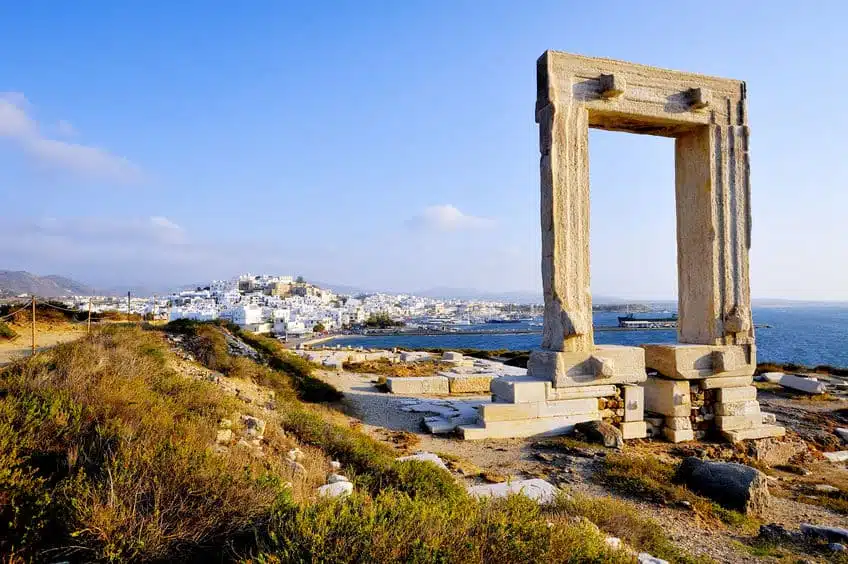
Located at the entrance to the port, the Portara welcomes visitors as soon as they arrive. This immense white marble gateway is over six metres high. It is the only vestige of a temple dedicated to Apollo, whose construction began in the 6th century BC. The building was never completed. However, its monumental entrance has survived the centuries without faltering. Built on the islet of Palatia, once connected to the main island, it dominates the Aegean Sea. As such, it symbolically marks the entrance to the historic world of Naxos.
A must for a stay in Naxos
It offers a spectacular panorama, especially as the sun slowly descends over the horizon. Every evening, visitors and locals alike gather here to witness this natural spectacle. The golden light transforms the Portara into an almost unreal silhouette. The structure also glows subtly at dusk, accentuating its timeless character.
A legend carved in stone
Portara is also linked to Greek mythology. According to tradition, it was on this islet that Theseus abandoned Ariadne after their escape from the labyrinth. Dionysus then took her in on the island. As a result, the place embodies a crossroads between founding story and real space. In this way, the Portara links stone to myth, memory to the sea. Today, admiring the Portara is one of the must-see experiences for those who choose to visit Naxos.
Chora: history, local life and Cycladic charm
A white labyrinth to explore on Naxos
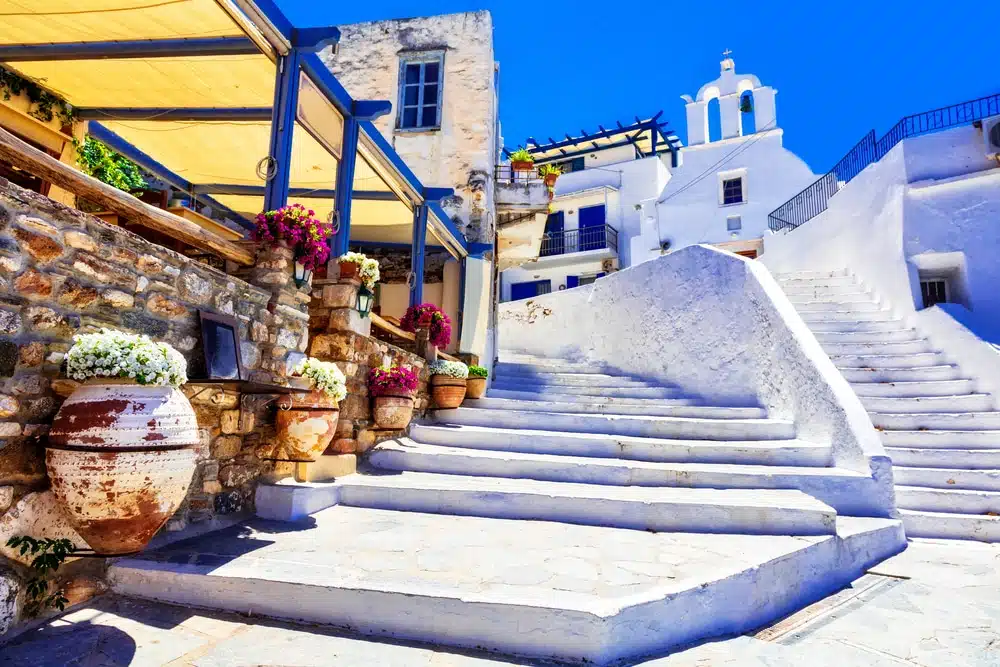
Chora, the capital of Naxos, is best explored on foot. Its narrow streets form a typical Cycladic maze. Whitewashed houses, colorful doors and stone staircases create a picturesque backdrop. At every turn, a square, gallery or church reveals itself. The town combines surprise and simplicity.
The Kastro: Venetian heritage at the top of the city
Dominating Chora, the Kastro bears witness to the Venetian presence on the island since the 13th century. Marco Sanudo built this fortified stone citadel. Today, it still houses noble residences, a Jesuit school and the Naxos Archaeological Museum. The view from the ramparts is well worth the climb. You’ll discover Chora from a whole new angle.
A lively atmosphere for a vacation on Naxos
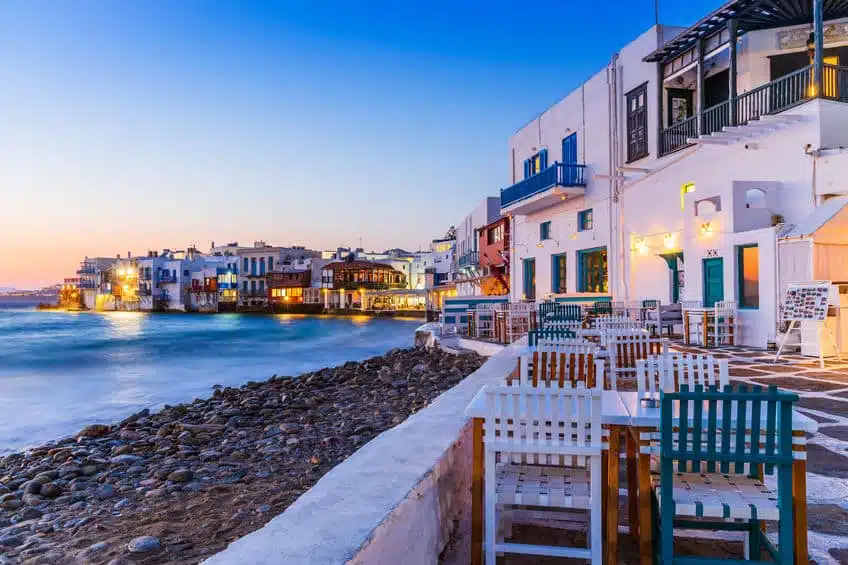
Below the Kastro, the old town comes alive with terraces, stores and tavernas. The atmosphere is lively without being excessive. During the day, the alleyways are cool and inviting. In the evening, they are alive with conversation, music and the scent of Greek cuisine. As a result, Chora’s appeal lies in the balance between liveliness and authenticity. Exploring Chora allows you to feel the beating heart of the island and remains an essential stopover for anyone wishing to visit Naxos.
Beaches to visit Naxos: relaxation, nature and adventure
The island offers a variety of beaches to suit all profiles. Some are wild, others more developed, but all share a crystal-clear sea. As a result, each beach offers a distinct atmosphere, always anchored in a remarkable natural setting. As a result, each beach offers a distinct atmosphere, always anchored in a remarkable natural setting. To visit Naxos fully, you need to explore several of its emblematic beaches.
Plaka: the emblematic beach of Naxos
Plaka stretches over several kilometers of golden sand. The turquoise waters are calm and shallow, perfect for swimming. In addition, a few discreet accommodations and tavernas line the shore, without detracting from the environment. The beach is ideal for families and those seeking peace and quiet.
Agios Prokopios: easily accessible and family-friendly
Located five kilometers from Chora, Agios Prokopios combines beauty and comfort. Its golden sand and calm waters make it ideal for children. Beach facilities and restaurants are also available. For greater peace and quiet, opt for the southern area.
Agia Anna: authenticity and a relaxed atmosphere
Just beyond Agios Prokopios, Agia Anna has a gentle charm. Fishing boats and sandy terraces add to its charm. It ‘s also a pleasant spot for a quiet lunch in the shade of the umbrellas. The atmosphere remains peaceful, even in high season.
Mikri Vigla: what to do on Naxos in terms of board sports
This beach attracts kitesurfers thanks to its steady winds. However, the more sheltered southern bay is also ideal for swimming. The place remains wild and very popular with active travelers. As a result, it’s an excellent compromise between nature and sport.
Alyko: wild coves and unspoilt landscapes
Alyko is made up of coves surrounded by dunes and cedars. The absence of infrastructure offers an authentic, silent experience. As you walk along the coastline, you’ll discover a number of discreet nooks and crannies, ideal for resting. It’s best to bring water and sun protection.
Pyrgaki: absolute calm in the south of the island
Further afield, Pyrgaki remains unspoilt and rarely visited, even in summer. The natural setting, bordered by arid hills, invites you to relax. Finally, it’s the perfect beach for reading, relaxing or simply enjoying the silence. These varied shores reflect all the diversity of the island and are a must for anyone wishing to visit Naxos.
Traditional villages: discovering the soul of Naxos
In the heart of the island, the mountain villages reveal another facet of the territory. Here, traditions endure, carried on by the people and the landscape. Each place tells its own story, often linked to architecture, craftsmanship or rural life. Exploring these villages also allows you to visit Naxos closer to its roots.
Apeiranthos: the marble village
Apeiranthos, perched at an altitude of 600 metres, is impressive for its marble-paved streets. Its austere architecture stands in stark contrast to the rest of the island. Venetian influences, arcades and village museums reinforce its cultural identity. As you stroll through the village, you can feel the pride the locals take in their heritage.
Halki: heritage, distilleries and the good life
Situated in the fertile Tragea valley, Halki’s charm lies in its neoclassical houses and peaceful atmosphere. In particular, the Vallindras distillery attracts visitors curious to discover kitron. What’s more, art galleries, craft stores and tree-lined cafés all invite you to take a stroll. All in all, it’s the perfect place for a gourmet and cultural break.
Filoti: the living heart of the mountains
Backed by Mount Zas, Filoti is a lively town with a central square and family-run tavernas. It’s also an ideal starting point for hikes to the Cave of Zeus. The white marble Panagia Filotitissa church is also well worth a visit. The village combines spirituality, nature and conviviality.
Koronos: authenticity on a hillside
Koronos, on the northeast side of Naxos, retains a discreet, deeply local atmosphere. The houses are built into the hillside, connected by winding staircases. Despite its isolation, the village remains lively. Here, culinary and craft traditions are still firmly rooted.
Moni: weaving tradition and panorama
Finally, the small village of Moni is renowned for its weaving expertise. In some homes, hand looms are still in use. The view over the Tragea valley adds to the charm of the place. As for the family taverns, they offer simple, tasty meals prepared with produce from the garden.
Organize your visit to the villages of Naxos
Exploring traditional villages requires a bit of organization, especially if you want to visit several in a single day. Fortunately, most are well connected by road and easily accessible.
For example, Halki, Filoti and Moni, located in the Tragea valley, can be visited in a pleasant loop starting from Chora. What’s more, these villages are close to each other, making it easy to get around. If you choose to visit in the morning, you can avoid the heat and have lunch on site.
Apeiranthos, further away, is worth at least an hour, not least for its museums, cafés and cobbled streets. Koronos, even further north, requires a longer detour. However, its authentic atmosphere fully justifies the trip.
Some villages are also linked by well-marked footpaths. So you can walk between two stages, in a soothing natural setting. Water, a cap and good shoes are essential. These itineraries offer an authentic and peaceful way to visit Naxos through its villages.
Local flavors and traditions
Graviera: the pride of cheese
Potatoes: emblem of Naxos
Kitron: the must-have local liqueur
Typical dishes to discover on a Naxos vacation
Where to enjoy local cuisine
Taste and bring back the flavours of Naxos
Local cheese dairies sell graviera directly, especially in Melanes and in the Chora markets. Several agricultural cooperatives sell vacuum-packed graviera, perfect for transport.
Visit the Vallindras distillery in Halki allows you to discover the entire production process. Free tasting on site, with the possibility of buying all three versions of the liqueur.
In addition to graviera and kitron, don’t forget to pack olive oil, local honey and dried spices (oregano, thyme, sage). These products are available in Chora’s craft stores or at village markets.
Vacuum-packed or hermetically sealed products are preferable for worry-free travel, especially when flying.
For those who choose to visit Naxos, bringing back these specialties will prolong the experience of an authentic, gourmet trip.
Naxos crafts: tradition and know-how
Weaving and embroidery
Marble sculpture
The island’s marble, used since antiquity, remains an emblematic material. In Apollonas, small hand-carved objects are on sale in local stores. In addition, you can see the unfinished kouros, a colossal statue that has remained in situ. In this way, the link between artistic tradition and the natural landscape becomes visible.
Ceramics and pottery
A craft rooted in everyday life
Explore and support handicrafts on Naxos
In the villages of Moni, Filoti, Apeiranthos and Sangri, some workshops can be visited directly. In Chora, several stores sell locally-made pieces, especially around the Kastro.
Prefer morning or late afternoon, especially in summer. Some workshops close during the hottest hours.
Give preference to items that are signed or accompanied by an indication of origin. Avoid mass-produced souvenirs with generic labels.
Hand-woven fabric, a small marble object, rustic pottery or a simple everyday utensil… The important thing is to choose a piece with a story.
Bringing back these local creations allows you to extend your trip while supporting those who perpetuate these traditions. It’s a simple gesture that adds meaning to the experience of visiting Naxos.
Nature and hiking: another way to visit Naxos
Mount Zas: a must on Naxos
Between villages and traditional paths
Numerous paths link the mountain villages. For example, you can walk between Halki, Moni and Kaloxilos. These paths pass through olive groves, Byzantine chapels and stone walls. In this way, walking becomes a way of discovering history and nature at the same time.
Tragea Valley: an inhabited landscape
South coast and nature reserve
Hiking in Naxos: what to do to prepare for your outings
- Mount Zas from Filoti (2 h round trip): to reach the summit of the Cyclades.
- Halki – Moni – Kaloxilos: easy loop through olive groves and small chapels.
- Apeiranthos – Fanari: a more demanding but very scenic route.
The trails around the villages are accessible to all.
Mount Zas requires a good level of fitness, but can be done without technical equipment.
Mornings are best, especially in summer, to avoid the heat. Between May and October, the trails are clear and the scenery clearly visible.
Comfortable shoes, plenty of water, hat, sun protection, and a map or offline hiking app.
Experience the island and visit Naxos to the rhythm of its festivals
Religious festivals and village celebrations
Dionysia Festival: culture, wine and music
Held in late July or early August, the Dionysia Festival livens up the streets of Chora. Concerts, shows, exhibitions and tastings bring to life the spirit of Dionysus, god of wine and celebration. The atmosphere remains friendly, between locals and visitors.
Potato festival in Agia Anna
Markets and shared moments