Visit Lesvos through myth and history
Before discovering the beaches and villages, it’s important to understand that visiting Lesvos also means going back to its mythological origins and ancient civilizations. The island has always been a crossroads of influences, blending culture, spirituality and military strategy.
The mythological origins of Lesvos and its cultural role
Lesvos is linked to several legends that have left their mark on Greek history. One of the most famous figures remains Sappho, a lyric poetess born on the island in the VIIᵉ century BC. Her poems, dedicated to love and beauty, had a profound influence on Western literature. Thanks to her, Lesvos established itself as a major artistic and intellectual center of ancient Greece.
Other accounts tell of Mithridates VI, King of Pontus, who took refuge on the island after his struggles against Rome. Several places bear his name, a sign of his historical imprint.
Mythology also links Lesvos to Dionysus, god of wine and celebration. His cults were active there, in connection with the island’s prosperous vineyards. Some ancient authors even mention that Plato studied on Lesvos, reinforcing its image as a land of knowledge and philosophy.
These tales, combining myths, literary figures and religious traditions, contribute to the island’s unique identity, at the crossroads of culture and spirituality.
Discover the ancient and Byzantine heritage of Lesvos
Visiting Lesvos also means immersing yourself in a heritage shaped by centuries of history. As early as Mycenaean times, the island prospered thanks to its trade in olive oil, wine and salted fish, becoming a crossroads in the Aegean Sea. Its bustling ports were already attracting sailors and merchants from all over the Mediterranean basin.
Under the Byzantine Empire, Lesvos took on a religious and strategic dimension. Churches and monasteries multiplied, bearing witness to the faith and architectural art of the time. The castle of Mytilene, still imposing today, is a reminder of the island’s defensive position against invasions. The ramparts and churches of Molyvos, meanwhile, offer a unique medieval atmosphere, where each alleyway seems to tell a page of history.
Walking through these sites, visitors feel the weight of past civilizations, between ancient grandeur and Byzantine heritage. This is a part of Lesvos where stone becomes memory, and history is still lived in the open air.
Must-see sites in Lesvos
Lesvos is an island rich in history, culture and natural beauty. As such, there are several emblematic places that absolutely deserve a visit, as they illustrate the diversity and authenticity of the island. Discover here the must-see sites that make Lesvos a real treasure to explore.
Molyvos Castle: a must-see medieval site on your stay in Lesvos
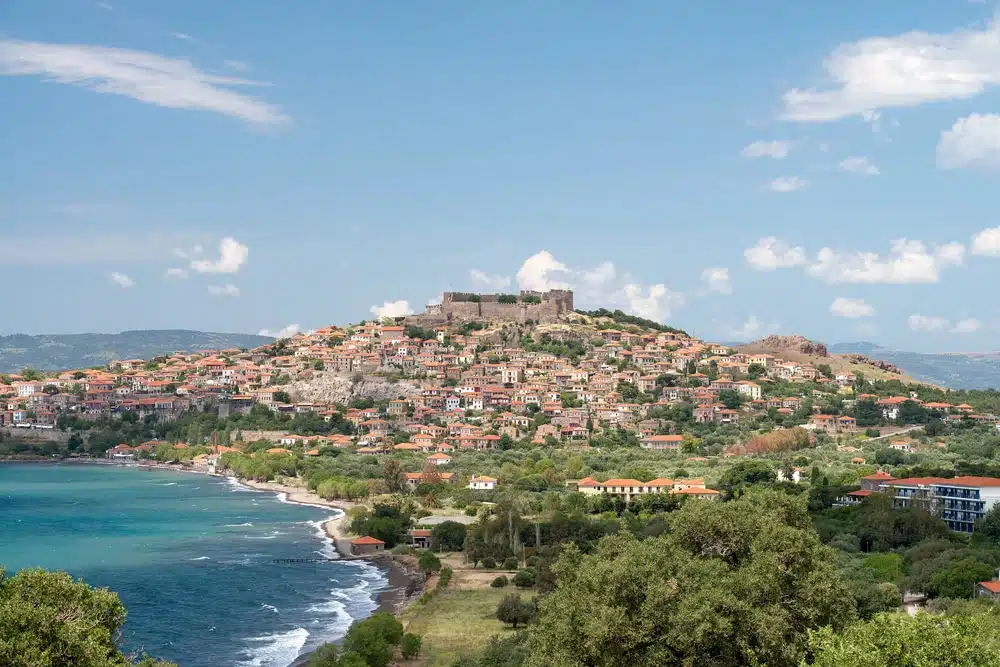
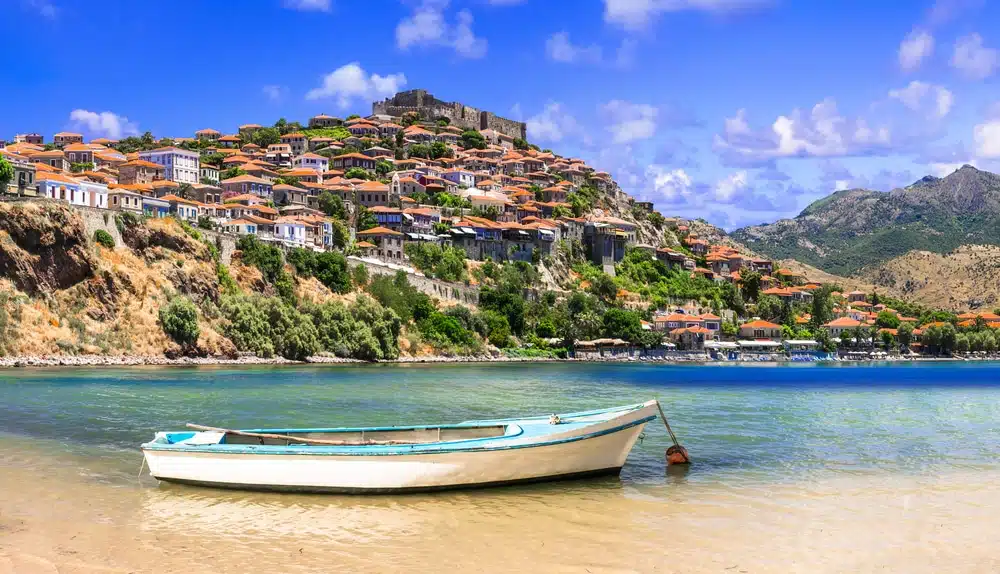
Molyvos Castle is one of Lesvos’ most emblematic monuments. Perched atop a hill, it overlooks the village and the Aegean Sea, offering spectacular views at every turn. Built in the XIIIᵉ century by the Genoese, it was later reinforced by the Ottomans, adding new structures.
The castle’s impressive ramparts, moats and watchtowers are a reminder of its strategic importance. A visit to the castle reveals its well-preserved medieval architecture, while enjoying exceptional panoramic views of the surrounding area.
Inside, visitors can explore the ruins of an ancient church and wander freely through the courtyards. In summer, the castle becomes a lively place: concerts, festivals and cultural events take place here, creating a unique atmosphere.
Finally, at sunset, the golden hues transform the landscape. This magical moment attracts photographers and emotion-seeking travelers alike.
Practical info Admission to Molyvos Castle costs between €3 and €5, depending on the season. Admission is free for children, and card payments are accepted.
The Limonos Monastery: spirituality and Byzantine heritage to visit in Lesvos
The Limonos Monastery is a must-see spiritual site for those interested in the island’s religious history. Located in the mountains in the center of the island, this monastery was founded in the 11th century and remains one of the most important on Lesvos. It has been a center of pilgrimage and learning for centuries.
Inside the monastery, visitors can admire beautifully preserved Byzantine frescoes, sacred icons and ancient manuscripts. The quiet, mystical atmosphere attracts those seeking to connect with the spiritual history of the region. The monastery also houses a small collection of religious art and precious relics.
The site is also renowned for its peaceful garden and views of the surrounding mountains, perfect for those wishing to relax in a natural setting.
The Mytilene Archaeological Museum: what to see in Lesvos in terms of ancient history
The Mytilene Archaeological Museum, located in the city of Mytilene, is a journey into the past. The museum exhibits artifacts dating from prehistoric times to the Roman era. On display are sculptures, pottery, inscriptions and everyday objects discovered during excavations on the island.
Highlights include sculptures from the Hellenistic period and artifacts from the ancient city of Antissa. This museum is essential for understanding the importance of Lesvos in antiquity, particularly its commercial and cultural role in the Aegean region.
A visit to this museum is particularly recommended for archaeology and ancient history enthusiasts.
Les Thermes d'Eftalou: relaxation and natural benefits during a stay in Lesvos
The thermal baths of Eftalou are one of the highlights of a stay in Lesvos. Located by the sea, these hot springs are renowned for their relaxing and therapeutic properties. In particular, they relieve rheumatism and joint pain. The natural warmth of these waters, combined with the breathtaking view of the horizon, creates a revitalizing and unforgettable experience.
Visitors can swim here all year round. The site boasts modern facilities to ensure bathers’ comfort. This popular destination is ideal not only for those seeking relaxation, but also for those wishing to benefit fully from the therapeutic virtues of these natural springs.
Lake Kalloni: nature and birdwatching on Lesvos
Lake Kalloni, located in the center of the island, is another natural attraction not to be missed. This large salt lake is home to a diverse range of fauna, including migratory birds. It is one of the best bird-watching sites in Greece. The lake is a protected area, and the surrounding region is ideal for walks and outdoor activities.
Nature lovers will particularly appreciate this place, as it offers a wide variety of bird species, as well as rare plants and animals. The lake is a perfect spot for photographers and nature lovers.
The beaches of Lesvos: relaxation, adventure and unspoilt nature
Visiting Lesvos also means enjoying a variety of beaches to suit all tastes. Whether you’re looking for tranquility, water sports or family bathing, the island offers unique shores. Here’s a round-up of Lesvos’ must-see beaches for a complete holiday.
The family beaches of Lesvos: accessibility and relaxation guaranteed
Family beaches are ideal for a stay in Lesvos with children. They combine calm waters, practical facilities and a friendly atmosphere.
Skala Kalloni Beach
Located on the south-east coast, Skala Kalloni beach boasts golden sands and shallow waters. The nearby village offers cafés and tavernas, perfect for extending the day with a local meal.
Petra Beach
To the north of Molyvos, Petra beach boasts fine sand and crystal-clear waters. Easy to access and well-equipped, it combines safety and comfort. Seaside restaurants offer fresh fish and seafood.
Secluded beaches in Lesvos: authenticity away from the crowds
For a different way to visit Lesvos, there’s nothing like its secluded beaches, perfect for those seeking peace and quiet and unspoilt scenery.
Tsichrinda Beach
Sparsely populated and surrounded by rocky outcrops, Tsichrinda is ideal for quiet picnics and swimming.
Eftalou Beach
Known for its thermal springs, Eftalou also offers a secluded beach. Its warm waters, a blend of the Aegean Sea and thermal baths, create a unique experience.
Lesvos sports beaches: an adventurer's paradise
Some beaches are a must if you’re wondering what to do in Lesvos on the sports front. Windsurfing, kitesurfing and scuba diving are just some of the activities on offer.
Vatera Beach
The island’s largest beach, renowned for its constant winds, attracts surf enthusiasts. Here you’ll find surf schools and equipment rentals.
Sigri Beach
Less frequented than Vatera but just as beautiful, Sigri offers swimming, snorkeling and spectacular coastal scenery.
Natural beaches of Lesvos: immersion in wild landscapes
For nature lovers, some of Lesvos’ beaches offer total immersion, with golden sands, translucent waters and birdwatching.
Melinda Beach
Close to Agios Nikolaos, Melinda captivates with its unspoilt scenery and peaceful atmosphere. It’s the perfect place to savor the island’s wild beauty.
Kaloni Beach
On the edge of Lake Kaloni, this small beach offers peace and quiet and birdwatching. Ideal for combining swimming and discovering the local fauna.
Nature in Lesvos: a paradise for biodiversity lovers
A visit to Lesvos is also a plunge into a preserved and generous natural environment. The island’s varied landscapes, from fragrant forests to majestic mountains and protected reserves, are a delight to behold. Every corner is home to remarkable flora and fauna, making Lesvos a unique destination for a holiday focused on authenticity and ecological discovery.
The Lesvos pine forest: a privileged ecosystem to explore
The pine forest, particularly around Agiasos, is one of Lesvos’ natural gems. Stretching over several kilometers, it is home to a wide variety of rare birds and small mammals. In summer, the fragrance of the pine trees envelops the walker, creating a soothing atmosphere.
Thanks to its accessible trails, this area is just as suitable for families as it is for experienced hikers. Birdwatching, walking in the heart of a lush green landscape and enjoying the silence make this an essential experience during a stay in Lesvos.
Nature reserves and Kalloni Park: sanctuary for local wildlife
In the center of the island, the Kalloni park and lagoons are a biodiversity hotspot. More than 250 species of migratory birds pass through here every year, making the site a benchmark for ornithologists.
These protected areas offer visitors a rare opportunity to immerse themselves in a rich and fragile ecosystem. Stroll along the edge of the lagoon, discreetly observe the fauna or simply contemplate the landscape: this is what to see in Lesvos in terms of nature. What’s more, conservation efforts are helping to preserve this unique balance.
The mountains of Lesvos: unforgettable hikes and panoramic views
The mountains of Lesvos offer spectacular panoramas, ideal for hikers. Mount Olympus, the island’s highest peak at 968 meters, offers breathtaking views of the Aegean Sea and neighboring islands.
The trails wind between lush green forests and rocky landscapes. Each hike allows you to admire the island’s diversity from a new angle. At the top, the reward is a breathtaking view, perfect for immortalizing your stay on Lesvos.
Lesvos flavours: local cuisine and products
In Lesvos, cuisine is an integral part of daily life. Thanks to its fertile soils and the Aegean Sea, the island boasts a rich terroir that nurtures ancient culinary traditions. Olive oil, artisan cheeses, local wines and seafood reflect a know-how handed down from generation to generation. To discover Lesvos is also to savor a simple, healthy gastronomy deeply rooted in its natural environment.
Lesvos olive oil: pride of the Mediterranean terroir
Lesvos olive oil is one of the island’s most prized products. Grown on thousand-year-old olive trees, it has unique characteristics thanks to the island’s exceptional climatic conditions. The olive trees, often planted in terraces on the hills, produce a superior quality olive oil, rich in antioxidants and fruity aromas.Lesvos olive oil is used in many traditional dishes, from starters to desserts. Its intense, fresh flavor is typical of Mediterranean cuisine. What’s more, the artisanal production method, which involves harvesting the olives by hand, guarantees a pure, authentic taste.
The island’s local producers are careful to respect traditional methods, guaranteeing consistent quality. Respect for the environment and sustainable olive-growing practices also contribute to the production of exceptional olive oil.
Traditional cheeses from Lesvos: a blend of flavour and tradition
Lesvos is also famous for its unique cheeses. Ladotyri, for example, is a firm-textured sheep’s or goat’s cheese with a slightly salty taste. Preserved in olive oil, it acquires an even more pronounced flavor while retaining its softness.
As well as Ladotyri, there are other specialities worth discovering:
Mytilinia creamy, mild cheese.
Kefalotyria dry, mature, slightly spicy cheese, ideal for grating over pasta or grilling.
These products reflect a culinary heritage handed down from generation to generation. They can be found in local taverns as well as in the island’s traditional markets.
Lesvos wines: the expression of a unique terroir
Vines also thrive in Lesvos. The Mediterranean climate, combined with volcanic soils, produces wines of character. The aromatic red Mavrothiriko variety produces rich, slightly spicy wines. Muscat de Lesvos, meanwhile, offers floral and sweet aromas, perfect as an aperitif or dessert wine.
The island’s winemakers combine ancestral know-how with modern innovations. The result? Authentic, distinctive wines. Visits to the vineyards are very popular with travellers, who can discover the secrets of wine-making, taste rare vintages and enjoy rolling landscapes with splendid views of the Aegean Sea.
Local vibes: must-see festivals and events to visit Lesvos
Visiting Lesvos also means discovering an island that lives to the rhythm of its festivals. These events reflect the island’s cultural diversity and offer a unique insight into its soul. They give you the chance to meet the locals, taste local produce and share unforgettable festive moments.
Lesvos International Music Festival
The Lesvos International Music Festival is a major cultural event, attracting musicians and music lovers from all over the world. This annual summer festival in Mytilene features a series of concerts of classical music, jazz and traditional Greek music. It showcases the island’s rich musical heritage, while promoting international cultural exchanges. The festival is a real showcase for local and international talent, and is very popular with visitors.
Ouzo Festival in Lesvos
The island’s flagship events include the Ouzo Festival takes center stage. Every year, Lesvos pays tribute to this emblematic spirit in a festive atmosphere. During the festival, visitors can learn about the ouzo-making process directly from local producers. In addition to tastings, the program also includes guided tours of distilleries, exhibitions and traditional concerts. Thanks to this celebration, everyone can explore the history of ouzo while enjoying Greek conviviality. This not-to-be-missed event combines
Religious holidays in Lesvos
Religious festivals play a central role in the social and spiritual life of the people of Lesvos. Among the highlights is Easter, a celebration of national importance, celebrated with processions, prayers and traditional meals. The Lesvos Carnival (called “Apokries”) is also very popular, marking the start of Lent with parades, masks and dances. Valentine’s Day is a more recent celebration, where locals come together to celebrate love and family ties with convivial festivities. Christmas celebrations are also very much alive in Lesvos, with Christmas markets, family meals and traditional carols.
LesvosTrail: discover the island differently
LesvosTrail is a hiking event that allows participants to discover the spectacular scenery of Lesvos. The festival offers a number of hiking trails suitable for all levels, allowing you to enjoy the island’s natural beauty while discovering its history and culture. Hikers cross mountains, valleys and picturesque villages, while soaking up the island’s biodiversity. LesvosTrail is ideal for nature and adventure lovers.
Lesvos Confest: culture and local products
Another of the island’s flagship events is the Lesvos Confest showcases the cultural and gastronomic wealth of Lesvos. Every year, this festival brings together local producers, craftsmen, musicians and chefs in a warm and friendly atmosphere. Visitors can sample regional specialities, buy handmade products and take part in interactive workshops on island traditions. As well as providing entertainment, the festival actively supports local initiatives. Thanks to this festive gathering, Lesvos is affirming its authentic identity while promoting its living heritage.
The traditions and crafts of Lesvos
Wool artisans: An ancestral tradition
Lesvos is renowned for its textile crafts, particularly wool production. For centuries, the island’s inhabitants have transformed wool into quality clothing and textiles, using techniques handed down from generation to generation. Local artisans make blankets, scarves and clothing from wool sourced from sheep raised on the island. These handmade products are highly prized for their quality and uniqueness. You can discover these creations in local boutiques, where craftsmen continue to work by hand, preserving traditional know-how.
Traditional Lesvos pottery: An art rooted in history
Pottery plays an important role in the culture of Lesvos. Since ancient times, the island has produced high-quality pottery, used both for everyday life and for rituals. Artisans create clay pots, vases, jars and other decorative objects, often inspired by the island’s cultural heritage. Lesvos pottery is characterized by geometric patterns and natural colors, often inspired by the surrounding nature. Visitors can purchase unique pieces in the island’s villages, where potters continue to perpetuate this tradition.
Hand-woven carpets and textiles: local expertise
Carpet and textile weaving is another of Lesvos’ specialties. This centuries-old technique is still practiced by local craftsmen who use hand looms to create rugs, cushions and blankets. Each piece is unique, handcrafted with motifs and colors inspired by local culture. Carpet weaving on Lesvos is distinguished by the use of high-quality wool and cotton yarns, making each textile durable and beautiful. Visitors can buy these rugs in local workshops or artisan markets, perfect for bringing home an authentic souvenir of the island.
Local life in Lesvos : Meet the locals
The culture of hospitality in Lesvos: A living tradition
The people of Lesvos are renowned for their warm welcome. Hospitality is an integral part of their culture. The island’s Greeks are proud to share their traditions and cuisine with visitors. This goes beyond simple gestures. A meal or a drink like Tsikoudia often symbolizes an act of hospitality. These moments offer an authentic immersion in local culture. You’ll feel the true generosity of the island.
Local markets: The soul of towns and villages
The markets in Mytilene and the surrounding villages are a must. You’ll find fresh produce, spices and local specialities. The atmosphere is lively and colorful, ideal for strolling around and discovering local life. These markets are also the place where artisans sell their creations, such as pottery and traditional fabrics. It’s a great way to immerse yourself in the island’s atmosphere. Meeting the locals adds even more charm to the experience.
Small taverns: At the heart of local culinary culture
The small local tavernas are convivial places. They serve traditional Greek cuisine, prepared with fresh ingredients. Here, dishes such as souvlaki and moussaka are a must. These tavernas are simple, but the welcome is always warm. Meals are served in large quantities, and there’s plenty to talk about over Ouzo or local wine. These taverns embody the true culinary culture of Lesvos. You’ll enjoy an authentic experience, far removed from mass tourism.
Sustainable tourism: Preserving the island while enjoying its beauty
Local green initiatives
The people of Lesvos are taking action to protect natural resources and wildlife. The Kalloni Nature Park is actively involved in the conservation of migratory birds. They also run projects to limit the environmental impact of tourism, notably by reducing waste and raising visitors’ awareness of nature conservation. Many beaches are protected and maintained by local associations.
Responsible tourism: Respecting nature
Visitors can adopt responsible practices to minimize their ecological impact. Choose eco-friendly accommodation, often run by local families. Use public transport or rent bicycles to discover the island without polluting. Avoid leaving litter and respect protected areas. Participating in guided, eco-friendly activities will allow you to discover the island’s natural wonders while contributing to their preservation.
Lesvos, the little-known island: Why travellers should discover it
Tourism off the beaten track
Lesvos offers a different experience from other popular Greek destinations. Whereas Mykonos or Santorini attract the crowds, Lesvos remains calm and unspoilt. The island offers an authentic Greek experience, far removed from mass tourism. What’s more, it combines a rich history, spectacular nature and magnificent beaches, offering a unique setting in which to recharge your batteries. It’s an ideal destination for travellers in search of tranquillity and deep cultural discovery.
Something for everyone
Lesvos offers a multitude of activities to suit all types of traveler. Hikers will enjoy the island’s mountains and panoramic landscapes. Nature lovers can explore nature reserves, watch migratory birds or enjoy secluded beaches. History buffs can visit ancient sites and traditional villages. Lesvos guarantees a complete experience, combining adventure, relaxation and culture.
Getting to and around the Greek island of a thousand treasures
Access to the island from the Greek mainland and surrounding islands
Lesvos is well served by ferries and flights.
From Athens
A direct 50-minute flight links the island to Mytilene airport.
Ferries
They depart from several mainland ports, including Piraeus, and serve Lesvos all year round. In high season, crossings are frequent. Ferries also leave from other nearby islands, such as Chios and Lesbos, providing easy access to the island.
Getting around the island
Bus
Lesvos has a bus network linking the main towns and villages.
Car rental
For added flexibility, renting a car lets you discover hidden beaches and explore sights at your own pace.
Cabs
Cabs are available in major cities for quick journeys.
Bike
Increasingly popular, cycling is an ideal way for nature lovers to discover the island in an environmentally-friendly way.