The fascinating history of Paros through the centuries
An island coveted since Antiquity
From Cycladic times onwards, Paros became a major center thanks to its strategic position and natural resources. The island is particularly famous for its white marble, used in famous works such as the Venus de Milo. This exceptional marble attracted not only artists, but also neighboring powers.
With the arrival of the ancient Greeks, Paros developed temples, sanctuaries and flourishing commercial ports. The island asserted itself in the Medieval wars, allying itself for a time with the Persians. These alliances led to tensions with the other Greek cities.
From Roman Empire to Byzantine domination
Under the Roman Empire, Paros retained its economic role, while seeing its culture adapt to the new masters. The Romans developed infrastructure and encouraged craft production.
Later, the Byzantine era brought spiritual renewal. Numerous churches were built, including the famous Panagia Ekatontapiliani. This 4th-century architectural gem became a place of pilgrimage and a symbol of the Orthodox faith.
The Venetian and Ottoman eras
In the 13th century, the Venetians took possession of Paros. They built the Kastro of Parikia from the stones of ancient temples, creating a curious architectural mix.
Later, the Ottomans took over, but the island retained a degree of local autonomy. In spite of heavy taxation and political tensions, the islanders maintain their traditions. Local culture continues to evolve, between Eastern influences and deep Greek roots.
An island involved in the Greek revolution
In the 19th century, Paros actively joined the struggle for Greek independence. Many of its inhabitants took part in the uprisings against the Ottoman Empire.
After the creation of the modern Greek state, the island regained political stability. Its heritage, natural beauty and geographical position made it a coveted destination, first for intellectuals, then for travellers from all over the world.
Museums on Paros: a heritage to explore on site
To extend this immersion in the history of Paros, a number of cultural sites offer a better understanding of the richness of the local past. In Parikia, the Archaeological Museum of Paros houses an impressive collection of remains dating from Neolithic times to the Roman era. These include the famous Archaic Gorgon, a remarkable statue of Artemis, as well as funerary stelae and votive objects. The museum highlights the island’s influence on the development of Cycladic art and ancient Greek sculpture.
Right next door, the Panagia Ekatontapiliani church, founded in the IVᵉ century, houses a Byzantine museum rich in icons and liturgical objects. This sacred site embodies both Orthodox spirituality and the continuity of religious heritage through the centuries. These two museums are the perfect complement to a visit to Paros, offering a concrete insight into its historical development. They also allow you to vary your discoveries, especially if you’re traveling off-season or on quieter days.
Visit Paros differently
Visiting Paros isn’t just about enjoying the beaches. The island reveals a unique personality to those who take the time to linger. Its identity is revealed in its villages, its heritage, its living traditions and its Mediterranean art of living.
An island between land and sea
Paros offers a rare natural diversity. Mountains, fertile valleys, secret coves and picturesque harbours all blend harmoniously. This striking contrast makes it easy to switch from a swim in crystal-clear waters to a walk in the heart of nature.
Vibrant local life
Unlike other very touristy islands, Paros remains inhabited all year round. This local presence gives its villages an authentic soul. Take a stroll through the narrow streets of Parikia or Naoussa, and you’ll come across craftsmen, fishermen and schoolchildren… Everyday Greek life is still unfolding before your very eyes.
A strategic point in the Cyclades
Thanks to its central position in the archipelago, Paros is an ideal base for exploring neighboring islands such as Antiparos, Naxos and Mykonos. Regular ferry connections make it easy to organize day trips.
Explore the island's most beautiful villages
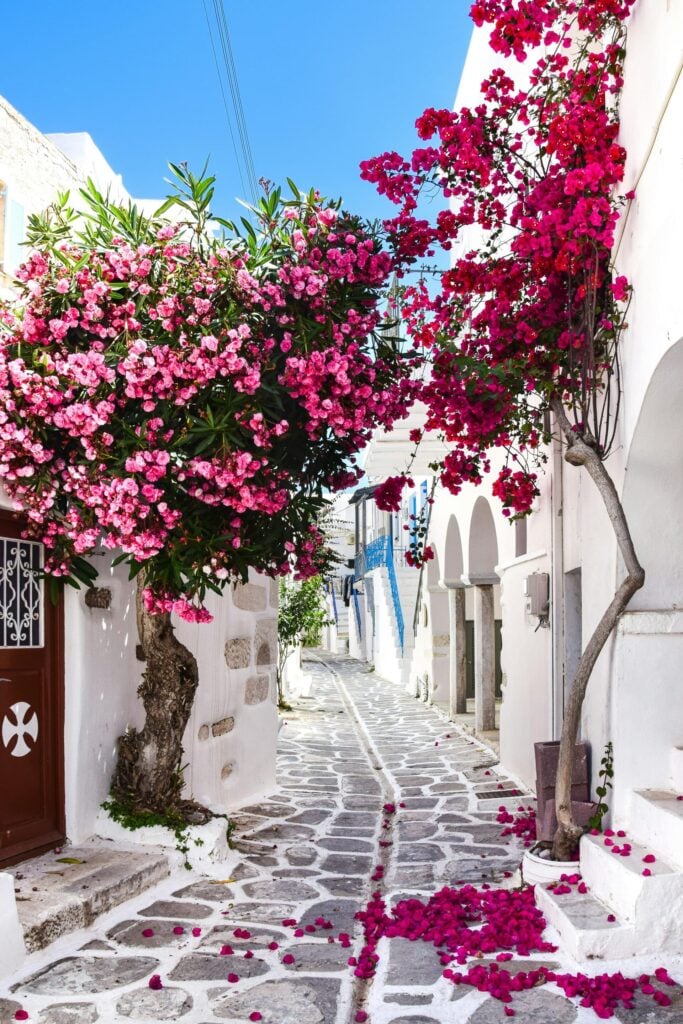
Visiting Paros also means taking the time to discover its villages, often perched high above the sea or overlooking it. Local life, heritage and flower-filled alleyways tell the story of the island’s soul far better than any postcard.
Parikia, a blend of history and local life
Parikia, the island’s capital, is immediately captivating with its vibrant atmosphere. As you stroll along, the white streets gradually reveal ancient churches, craft stores and typical tavernas. At the heart of the town, the Kastro, a Venetian fortification, dominates the old town, offering a superb panorama of the sea. So a visit to Parikia is like plunging into a rich past while enjoying the island life of today.
Naoussa, with its Cycladic charm and lively atmosphere
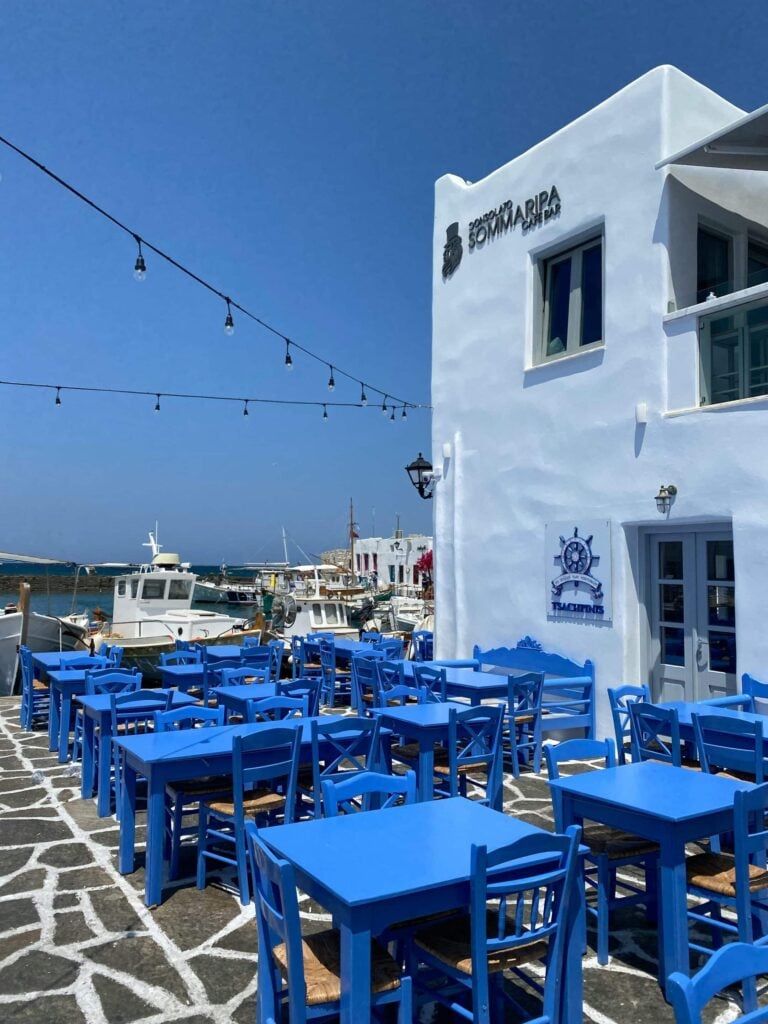
A former fishing port turned chic village, Naoussa attracts visitors with its picture-postcard setting. The small port is home to colorful boats, lined with restaurants and terrace cafés. In the evening, the atmosphere becomes festive but remains elegant. It’s the ideal place to enjoy fresh fish, admire the sunset or stroll between art galleries and flower-filled alleyways.
Lefkès, a hidden gem in the heart of the island
Lefkès, the former capital, is perched on a hill. The village, with its whitewashed houses and cobbled streets, is very peaceful. The large Agia Triada church dominates the center. Surrounded by olive groves, Lefkès is also the starting point for the Byzantine Trail, perfect for a stroll to Prodromos. This authentic village offers a soothing break in a lush natural setting.
The best beaches to visit Paros under the sun
To visit Paros without discovering its beaches would be unthinkable. The island offers a diversity of seascapes, from discreet coves to long golden stretches, ideal for swimming, relaxing or water sports.
Kolymbithres, an almost lunar setting
Situated in the Bay of Naoussa, Kolymbithres offers a surprising array of wind-sculpted rocks. These granite formations create natural coves, ideal for bathing or relaxing. Thanks to its shallow waters, the beach is perfect for families.
Santa Maria, a lively, sporty beach
Further north, Santa Maria is ideal for water sports enthusiasts. Windsurfing, diving and paddle boarding are all available. Beach clubs also offer sunbeds, music and food. Despite the lively atmosphere, the landscape remains unspoilt.
Faragas, a haven of peace in the south
Less frequented, Faragas nestles in a wind-protected cove. The water is clear and calm. Wooden umbrellas, a secluded tavern and a peaceful ambience make this a great place to relax.
Golden Beach, a surfer's paradise
It’s the longest beach on the island. Golden Beach attracts sports enthusiasts for its constant winds and golden sand. Every summer, international windsurfing competitions are held here. It’s also great for swimming and walking.
Local specialities and traditions to savour on site
Paros also appeals to the taste buds. On this island, gastronomy remains deeply linked to the seasons, local produce and know-how handed down from generation to generation. Each village has its own specialities, festivals and even well-kept secrets.
Traditional cheeses and recipes
On the savoury side, artisan cheeses such as myzithraand xynomyzithra or ladotyri take center stage. Made in small, often family-run cheese dairies, they are a perfect accompaniment to both hot dishes and mezze. In the higher parts of the island, around Kostos or Prodromos, some producers still offer live tastings.
Chickpeas are an important part of Paros cuisine, giving rise to dishes such as revithada, simmered slowly in the oven in an earthenware pot. This recipe is often served at Sunday lunchtime in village tavernas, particularly in Marpissa and Lefkès.
Local sweets and almond pastries
On the sweet side amygdalotasoft almond cakes flavored with orange blossom water, are a must. They’re easy to find in Parikia’s patisseries, as well as at local festivals.
Local wines and festive traditions
Paros wines, renowned for their character and authenticity, accompany these flavors. Several local wineries offer wine tastings, such as Moraitis in Naoussa, which cultivates its vines organically and promotes indigenous grape varieties.
Finally, traditions wouldn’t be complete without the many popular festivals held throughout the summer. In Lefkès, the Wine Festival brings locals and visitors together to enjoy home-cooked food, live music and dancing. In Naoussa, the pirate festival combines entertainment, masquerade costume and local gastronomy in a unique festive atmosphere. Participating in these events is a lively and delicious way to visit Paros.
Local crafts and traditions: the living soul of Paros
Even today, Paros preserves an ancestral know-how handed down from generation to generation. Throughout the island, craftsmen and designers perpetuate local techniques, some of which are centuries old.
In villages such as Lefkès and Marpissa, numerous workshops open their doors to curious visitors. Here you can watch potters working the clay with precision, shaping vases and plates with typical motifs. Paros ceramics are renowned for their finesse, harmonious shapes and natural hues.
And weaving is still very much alive. Many women still produce fabrics by hand, using traditional looms. Their creations, often colored with natural pigments, are used to make tablecloths, scarves and curtains.
Strolling through the narrow streets of Parikia or Naoussa, you’ll also come across jewellers’ workshops. These craftsmen use local stones and techniques inspired by Antiquity to create unique pieces, often handed down from generation to generation.
At the same time, religious and cultural festivals punctuate island life throughout the year. Every summer, the “panigiria”, traditional village festivals, bring locals and visitors together to enjoy music, dance and cuisine. These eagerly awaited events reflect the island’s spirit of hospitality and sharing.
Paros, through its crafts and traditions, offers an authentic immersion in a preserved and warm way of life, an essential dimension for those wishing to visit Paros beyond the tourist clichés.
Things to do during your stay: explore, move, enjoy
Hiking in the heart of the island
Paros lends itself to nature walks. The famous Byzantine path links Lefkès to Prodromos through olive groves and low stone walls. This historic path, perfectly preserved, reveals splendid panoramas and authentic rural Greece.
Other itineraries lead to perched chapels, such as Agios Antonios, offering exceptional views over the island.
Water sports for all tastes
With its windy beaches, Paros is a well-known spot for kitesurfing and windsurfing, especially near Pounda and Golden Beach. Numerous schools offer courses for beginners and advanced windsurfers.
Scuba diving, paddleboarding and kayaking are also great ways to discover the coastline.
Yoga and well-being in soothing surroundings
Several yoga centers welcome visitors for outdoor sessions. The natural setting encourages calm and reconnection. Some hotels also offer wellness retreats.
Cruises and maritime escapades around Paros
Paros is also an ideal starting point for exploring neighboring islands. Boat excursions take you to Antiparos, a small, peaceful island with wild beaches and impressive caves.
Other cruises take you around Paros, stopping to swim in secret coves accessible only by sea.
Some tours include the discovery of the smaller Cyclades, such as Koufonisia or Iraklia, offering an unforgettable maritime adventure.
These getaways are the perfect opportunity to enjoy the Aegean Sea, dive into translucent waters and discover unspoilt spots far from the crowds.
Local festivals and traditions: experience the island differently
In addition to its enchanting landscapes, Paros is also known for its lively traditions and popular festivals. Throughout the year, the island offers unique events, combining spirituality, gastronomy and local music. Every season is an opportunity to discover the authenticity of Parian culture.
Festivities rooted in Cycladic culture
One of Parikia’s most emblematic celebrations is the Assumption on August 15. Religious processions, concerts and fireworks enliven the town around the Ekatontapyliani church. It’s an opportunity to share a special moment with the locals.
In Naoussa, the Pirate Festival, held every August 23, recalls the days of privateer invasions. Disguised locals re-enact a naval battle in the middle of the night. The atmosphere is festive, and the streets are lit up with music and dance.
Gourmet and musical celebrations
During the summer, several villages organize wine and local produce festivals. In Lefkes or Marpissa, you can taste goat’s cheese, homemade wine or stewed dishes, while listening to rebetiko or traditional tunes.
Finally, there are numerous concerts, exhibitions and theatrical performances, especially in July and August. The island comes alive in a convivial atmosphere, conducive to cultural exchange.
Our practical advice for a worry-free visit to Paros
Getting to Paros is easy
Getting around the island
Once you’ve arrived, there are several options open to you. Renting a car or scooter is the most flexible way to explore the island. Agencies are available near the port and airport.
The bus network is well organized, especially in high season. It links the main villages and beaches at low cost. To discover isolated coves, opt for water cabs or maritime shuttles.
Best time to visit
Useful tips for worry-free travel