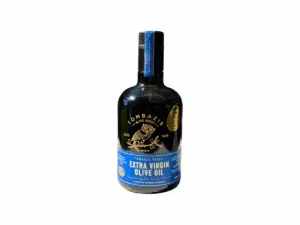
Technical analysis of Tombazis olive oil
Technical analysis of Tombazis olive oil shows a precise and reliable extra virgin oil. It comes from Koroneiki olives harvested early in the north-east of the Peloponnese. Thanks to this choice, the structure remains stable and traceability clear. What’s more, the density of bioactive compounds remains high. The result is a rare profile, sought after by experts, oil sommeliers and importers alike. This article brings together figures, sensations and commercial issues. It is aimed at international juries, professionals and discerning amateurs alike.
Located in Galatás, facing the Saronic Gulf, the estate enjoys a mild marine climate. Full southern exposure and over 2,800 hours of sunshine enhance fruit ripeness. As a result, aromatics and polyphenols gain in intensity. The area offers a unique setting for rich, expressive Koroneiki.
In these non-irrigated plots, Koroneiki olive trees grow in healthy, well-drained clay-limestone soil. Grass between the rows protects the soil and supports a varied Mediterranean flora. The presence of chamomile, rosemary and wild fennel enriches the ecosystem. In addition, bees and hoverflies enhance the vitality of the plots. Together, they create a living environment that naturally supports quality.
The technical choice remains clear. Yields are limited to increase density. Harvesting is done early and entirely by hand. Cold crushing is carried out at below 26°C, and extraction is carried out in two phases without adding water. Gentle filtration follows. Finally, nitrogen storage in temperature-stable stainless steel tanks protects the aromas and bioactives. Thanks to this rigorous approach, Tombazis preserves organoleptic finesse and aromatic freshness, year after year.
Origin and terroir : Galatas, in the heart of the Peloponnese
An age-old terroir with exceptional climatic conditions
The Tombazis Olive Grove estate is located in the hills above Galatás, between the sea and the mountains. This agricultural village in the Peloponnese offers an ideal setting for growing Koroneiki. The technical analyses of Tombazis olive oil reflect this harmony between nature and know-how. The landscape overlooks the Saronic Gulf and opens onto the island of Poros, creating a unique atmosphere.
The relief features regular slopes that ensure efficient drainage. This geological model also guarantees even sunshine on each plot. The trees benefit from direct sunlight, essential for the development of green aromas. The estate also benefits from over 2800 hours of sunshine a year. What’s more, a constant sea breeze naturally sanitizes the foliage and limits fungal diseases.
At night, temperatures drop sharply. This thermal amplitude slows ripening and reinforces phenolic density. The olives thus gain in complexity without losing their freshness. The soil remains dry in summer, creating moderate water stress. This phenomenon stimulates the formation of polyphenols such as oleacein and hydroxytyrosol.
This precise terroir forges an olive oil of character. Each drop expresses the altitude, light and climatic rigor of Galatás. The final profile is dense, straightforward and technically remarkable.
An ancestral variety cultivated with respect for natural balance
At the Tombazis estate, every olive tree belongs to the Koroneiki variety. This variety, well known in Greece, is distinguished by its high content of useful compounds. Technical analyses of Tombazis olive oil confirm this quality. What’s more, Koroneiki adapts well to poor soils and dry climates. As a result, the estate’s production remains stable and homogeneous, a fact that appeals to professionals.
The trees grow without artificial irrigation. This choice creates a slight lack of water, which stimulates the production of polyphenols. The olives thus gain in oleocanthal and oleuropein aglycone, two important markers. Galatás’ clay-limestone soil reinforces this effect. It retains minerals well and releases moisture slowly, helping the natural formation of compounds.
The estate also follows a simple, clean farming method. The growers use neither herbicides nor chemical pesticides. Grass remains in place between the rows, protecting soil life. This cover also attracts bees and other beneficial insects. It limits erosion and supports a sustainable natural balance.
In this way, the olive trees grow in a coherent, living environment. Thanks to this careful management, the plots gain in stability. This directly improves the final quality of Tombazis oil.
Organic certification: a regulatory and analytical foundation
The Tombazis Olive Grove estate holds organic certification in compliance with European regulation 2018/848. This framework imposes strict annual controls, carried out by approved organizations. Each inspection verifies the total absence of synthetic inputs and compliance with authorized cultivation practices. The estate also adopts manual pruning adapted to the tree’s natural cycle, which supports the vigor and physiological balance of each olive tree.
This certification goes beyond the usual ecological framework. It requires complete traceability of each batch, from the plot to the final bottling. The estate records all cultivation operations and the origin of organic fertilizers used. This level of transparency meets the expectations of specialized circuits and premium markets. It also paves the way for several demanding countries, such as Switzerland, Canada and Scandinavia. These markets demand a strict level of proof, in line with the Tombazis Olive Oil Technical Analyses.
The effects of this organic management can also be measured in the analyses. The absence of chemical inputs protects the biochemical integrity of the fruit. It also preserves the natural enzymatic activity often disrupted by systemic pesticides. Several studies have shown that olives from certified organic orchards have more stable concentrations of complex polyphenols. These studies cite oleacein and hydroxytyrosol, two important markers for technical oils.
Organic certification represents a quality foundation for the estate. It supports a clean, traceable product that complies with the strictest sanitary requirements. It also reinforces Tombazis’ technical credibility with importers, sommeliers and specialized juries.
A temperate microclimate conducive to aromatic concentration
The microclimate of Galatas subtly blends the influences of Parnon and the Saronic Gulf. The area enjoys mild winters and a stable rainfall pattern. Olive trees are therefore neither subject to extreme drought nor excess water. This climatic rhythm supports slow ripening, with a gradual rise in bioactives.
Thermal amplitudes remain low in this coastal region. This factor enhances polyphenol biosynthesis and ensures a regular evolution of secoiridoids. This phenomenon also improves taste stability and extends the ideal harvesting period. What’s more, the sea breezes provide a constant level of humidity, without encouraging fungal diseases.
Thanks to these conditions, the fruit retains a remarkable enzymatic freshness. Green aromas gain in precision, with clear notes of fresh grass, green apple and raw artichoke. Hints of almond and green tomato then add depth. The whole reflects a mastered coastal terroir, in line with the expectations of the Tombazis Olive Oil Technical Analysis.
This microclimate shapes an elegant, easy-to-read oil. Each batch expresses a stable vegetal framework and great aromatic finesse. This consistency reinforces the estate’s position among the technical productions of the northern Peloponnese.
Varietal selection and harvest control: rigor in the service of taste
An elite variety, perfectly adapted to its terroir
The Tombazis estate concentrates its work on Koroneiki, a long-established Greek variety. It has a high phenol content and good field resistance. It also produces aromatic, stable and regular oils. This choice is well suited to the clay-limestone soils of the Peloponnese. As a result, the variety retains a rich, consistent natural structure.
At Galatás, Koroneiki shows a clear sensory identity. The green fruitiness arrives strongly, followed by a mild bitterness. Then, a light spiciness appears in the throat, a sign of good oleocanthal presence. The olives remain small and compact, with few pits. They therefore concentrate many useful compounds, including oleacein and ligstroside aglycone. These molecules reinforce the oil’s stability and prolong its freshness.
The variety’s earliness means it can be harvested as early as the end of October. This is when the active compounds reach their peak. Careful cold-pressing then captures the full expression of the Koroneiki. The oil then gains in structure, aromatic finesse and nutritional strength. In the semi-coastal areas of northern Peloponnese, this variety often reaches a rare level. It thus confirms the conclusions of technical analyses of Tombazis olive oil.
Early manual harvesting: controlling the biochemical profile right from the tree
At Tombazis Olive Grove, harvesting begins in the first days of October. Thanks to this choice, polyphenols rise to very high levels. This period also supports oleocanthal, oleacein and hydroxytyrosol. These compounds are formed mainly when olives are still young. They therefore show their full value with a very early harvest.
Harvesting remains manual and very precise. In addition, the teams lay nets on the ground to protect the olives. This method avoids shocks and limits undesirable reactions. It also reduces the risk of fermentation. The fruit is then placed in openwork crates. These allow air to circulate and prevent overheating.
The time between the trees and the mill is very short. In fact, less than two hours separate harvesting from arrival at the extraction site. Thanks to this speed, the freshness of the fruit remains intact. Aromas are better preserved and volatile compounds remain stable. Technical analyses of Tombazis olive oil confirm the effects of this precise protocol. The aromatic profile remains straightforward, clean and free of fermentative notes.
Controlled yields: a commitment to nutritional density
The Tombazis Olive Grove estate chooses a very low yield, around ten kilos of olives per liter of oil. This choice creates fruit rich in dry matter and low in water content. It also increases the presence of phenolic precursors. This approach runs counter to conventional production logic and aims for something simple: maximum quality.
This reduced yield naturally enhances the oil’s bioactive density. It also supports oleocanthal, oleacein, flavonoids and lignans. Each family of compounds enriches the aromatic structure and enhances the nutritional value. Technical analyses of Tombazis olive oil confirm this richness, with a stable and precise profile.
Thanks to this protocol, the oil gains remarkable concentration. It shows strong antioxidant activity and long aromatic persistence. It also retains a clear and measurable nutritional value. This level of intensity remains rare without irrigation or concentration methods. Yet its consistency and precision win over competition juries and sensory panels.
Technical analysis of Tombazis olive oil
Extraction method: technological precision in the service of life
Cold extraction in a controlled atmosphere: technological precision and respect for the fruit
At Tombazis Olive Grove, extraction follows a very precise protocol. Each step protects the quality of the fruit. The olives arrive at the mill in just a few hours. Thanks to this short lead time, enzymatic freshness remains ideal. What’s more, the temperature never exceeds 26°C, in line with the rules of cold extraction.
Mixing progresses slowly and under a nitrogen atmosphere. This choice immediately reduces oxidation. It also retains the C5 and C6 aromas of fresh grass, green apple and artichoke. These aromas form the basis of the green fruitiness of early Koroneiki. Sensitive polyphenols, including oleacein and oleocanthal, are also well preserved.
Secondly, the field uses a two-phase method. This approach avoids the use of hot water and limits the loss of water-soluble compounds. The result is a clean, rapid extraction. The oil gains in expression as soon as it leaves the decanter. Technical analyses of Tombazis olive oil confirm the consistency of this protocol.
This level of quality is rare outside artisanal production. Yet it meets the expectations of gourmet kitchens and specialized markets. It also demonstrates the estate’s determination to produce an oil that is precise, stable and faithful to the Koroneiki signature.
Gravity settling and stainless steel tanks: a natural clarification protocol
Once extracted, Tombazis olive oil enters a natural resting phase. This stage is important to maintain the oil’s aromatic identity. It rests in AISI 304 stainless steel tanks, away from light and heat. As a result, the internal atmosphere remains stable and neutral. This calm environment limits undesirable reactions.
Thereafter, no forced centrifugation takes place. Decanting proceeds slowly, thanks solely to gravity. Plant particles sink gently to the bottom. Traces of water follow suit. This slow pace improves clarity without creating mechanical stress.
This approach offers several advantages. Firstly, it avoids anaerobic fermentation. Secondly, it stabilizes the aldehydes and esters that form the core of the aromatic bouquet. What’s more, it improves the oil’s visual clarity. Technical analyses of Tombazis olive oil confirm the real benefit of this method.
Finally, this natural decantation reduces unstable water-soluble fractions. The oil thus gains in oxidative stability. It also prepares more calmly for filtration or bottling. Above all, it retains all its nutritional and aromatic value.
Gravity filtration: the final key to analytical purity
After natural settling, Tombazis olive oil undergoes gentle filtration. The estate uses non-pressurized cellulose plates. This method moves slowly and respects the aromas. It removes small drops of water, plant remains and traces of mucilage.
Filtration plays an important role. It prevents secondary fermentation and limits oxidation reactions. It also protects the highly sensitive volatile aldehydes and alcohols. These compounds, produced by the lipoxygenase pathway, give notes of fresh grass, tomato leaf or green apple.
This step also improves the oil’s chemical cleanliness. It reduces oxidative trigger points and protects the most fragile polyphenols. As a result, secoiridoids such as oleacein and oleocanthal retain their intensity better. Technical analyses of Tombazis olive oil confirm this greater stability.
This meticulous approach reflects the estate’s philosophy. It produces a clean, precise and stable oil. It also highlights the quality of the olives and the care taken at every stage.
Nitrogen storage: a controlled atmosphere for preserved oil
Once filtered, Tombazis olive oil enters directly into AISI 304 stainless steel tanks. This material remains neutral and protects sensitive compounds. What’s more, the tanks are watertight and highly stable. As a result, the oil remains in an ideal environment, especially when it contains high levels of phenols.
Before closing the tanks, the producer injects a stream of nitrogen. This gas replaces oxygen and creates a controlled atmosphere. As a result, autoxidation drops sharply. This step also blocks enzymatic reactions. It also limits the formation of undesirable lipid chains and protects the aldehydes responsible for aromas.
At the same time, this process stabilizes the most sensitive phenols, such as hydroxytyrosol and oleocanthal. It also protects several flavonoids and native chlorophyll, which is very fragile in the face of air and light. Technical analyses of Tombazis olive oil confirm this remarkable stability.
Thanks to this protocol, inspired by top-of-the-range mills, the oil retains exemplary freshness. It also retains a rare aromatic precision right through to bottling. Each batch retains its identity, clarity and nutritional value.
Storage & Packaging: Guaranteeing integrity to the last gesture
Inert storage and thermal control: Post-extraction locking of analytical qualities
As soon as it leaves the separator, Tombazis olive oil is transferred to AISI 304 stainless steel tanks. This material remains neutral and protects the oil’s structure. What’s more, it does not interact with the fatty acids, enhancing stability right from the start of storage.
Before closing each tank, a precise flow of nitrogen fills the empty space. This gas replaces oxygen and blocks the onset of oxidation. Thanks to this inertia, phenols and aromas remain secure. Technical analyses of Tombazis olive oil confirm the effects of this protocol.
The vats then rest in a temperature-controlled room. The heat remains stable, between 16 and 18°C, which protects the aromatic balance. Above 20°C, oxidation proceeds more rapidly, reducing phenols. Conversely, if the temperature is too low, some esters freeze and cloud the sensory readings.
Thanks to this strict control, the oil retains its herbaceous aromas and sensitive pigments. It also maintains a very low peroxidation index throughout storage. Technical measurements show above-average stability. This consistency strengthens Tombazis’ credibility on international markets.
Systematic inerting: a barrier against oxygen
Before closing the tanks, the team injects a precise stream of nitrogen gas into the headspace. This neutral gas replaces oxygen, creating a totally inert atmosphere. This choice blocks the onset of lipid peroxidation reactions, the primary sources of aromatic degradation.
This mastery immediately protects the most sensitive compounds. Oleacein and hydroxytyrosol are among the most fragile molecules. Thanks to this method, they retain their biochemical activity. Technical analyses of Tombazis olive oil show very good stability for these biomarkers.
The tanks are then placed in a temperature-controlled environment maintained between 16 and 18°C. This range greatly limits the speed of natural oxidation. It also preserves the aromatic structure, green pigments and major polyphenols. Together, they form a coherent protection system, designed to last.
This strategy is directly inspired by the strictest oenological protocols. Few artisan mills use it so consistently. This high standard ensures that the oil is bioactive, fresh and true to its initial profile, even after several months’ storage.
Packaging: technicality and traceability
At Tombazis Olive Grove, the team only starts bottling on demand. This choice reduces oxidation and guarantees fresh oil right up to the last moment. What’s more, each unit receives a dark glass or food-grade metal opaque container. This type of packaging blocks light and protects the most sensitive polyphenols.
Next, the labels provide all the relevant information. They display the batch number, harvest date, precise cuvée and certifications. In this way, traceability is clear and immediate. This means restaurateurs, importers and customers can verify the origin of the product without doubt.
What’s more, this vintage bottling system demonstrates the estate’s strong commitment. It offers real transparency and reinforces the technical value of each batch. Technical analysis of Tombazis olive oil confirms the coherence between traceability, quality and sensory identity. Each bottle thus becomes a precise witness to its year, easy to verify for commercial or scientific purposes.
Technical analysis of Tombazis olive oil
Phenolic composition: molecular architecture and analytical performance
Phenolic signature: an analytical profile validated by HPLC chromatography
Certificate of analysis no. Π-119908 shows a value of 433 mg/kg of polyphenols, measured by HPLC-DAD. This level far exceeds the 250 mg/kg threshold set by Regulation (EU) 432/2012. Thanks to this, the oil can display the health claim linked to the protection of lipids against oxidative stress. This point remains important, as it proves a real wealth of active compounds.
This density places Tombazis among the oils richest in natural antioxidants. It joins the best vintages from Crete, Italy and Catalonia. What’s more, this level is the result of a clear protocol: early harvesting, firm Koroneiki, gentle extraction and short blending. Then, inerting is applied as soon as the oil settles, to reinforce its stability. Technical analyses of Tombazis olive oil confirm this mastery at every stage.
Recent studies show the major benefits of these molecules. Oleacein, oleocanthal, hydroxytyrosol and tyrosol support inflammation management. They also support cardio-metabolic protection. What’s more, they reinforce the fight against oxidative stress, a central issue in today’s nutrition.
Last but not least, the consistency between batches reinforces the credibility of the estate. Variations remain low from one year to the next. As a result, technical juries, importers and tenders find a stable, reliable product. This consistency also underlines a rigor that is rare for an artisanal structure.
Biomarker selection: oleocanthal, oleacein and aglycones
Technical analyses of Tombazis olive oil show a concentration of 79 mg/kg oleocanthal and 78 mg/kg oleacein. These two secoiridoids play an essential role in modulating inflammation and antioxidant action. They also influence taste structure. Their high presence confirms strict process control: stable temperature below 26°C, short blending time and extraction without addition of water.
Next, measurements reveal a solid set of aglycones. Oleuropein aglycone reaches 104 mg/kg, while ligstroside aglycone reaches 21 mg/kg. These molecules indicate a well-controlled immature crop. They also indicate consistent enzymatic activity during extraction. Their quantification reinforces the idea of a dense, technically constructed chemical profile.
This bioactive spectrum impresses with its coherence. It combines secoiridoids, aglycones and simple phenols in a legible architecture. This structure explains the clear spiciness in the throat, linked to oleocanthal. It also justifies oleacein’s signature vegetal bitterness. Sensory panels appreciate this duo, which creates a precise and stable taste identity. Several international competitions recognize this type of profile, including the NYIOOC, Olive Japan and the ISA.
Simple phenols, flavonoids and lignans: structural finesse
Technical analysis of Tombazis olive oil shows 9 mg/kg hydroxytyrosol and 5 mg/kg tyrosol. These two simple phenols play a key role in lipid protection. They also help the oil to remain stable for longer. Thanks to them, aromatic freshness is maintained after opening.
Next, lignans reach 35 mg/kg. These molecules strengthen the oil’s internal structure. They also improve its resistance to heat and light. As a result, service life remains more reliable than that of a standard oil.
No precise figures are available for flavonoids. However, tasting shows clear signs of their presence. Notes of olive leaf, raw artichoke and cut grass all point in this direction. These compounds reinforce the vegetal aromas and support the oil’s antioxidant defenses.
Ultimately, all these families of compounds create a complete phenolic matrix. Simple phenols, lignans, flavonoids and secoiridoids act together. They form a stable, clear and easy-to-understand structure. Thanks to this coherence, the oil attracts the attention of chefs, sommeliers and juries. It demonstrates rare quality and solid technical mastery.
Functional & stability implications: from analysis to market
Technical analyses of Tombazis olive oil show an acidity of 0.20% and a peroxide value of 4.6 meq O₂/kg. These values indicate a fresh and very stable oil. The level of free fatty acids proves a clean extraction, without thermal stress. In addition, the very low index confirms good protection against oxidation. The compounds present are fully active and support the lipid structure throughout the entire life cycle.
Technical analyses of Tombazis olive oil also show a strong link between low oxidation and high phenol content. Thanks to this combination, the oil retains a rare stability. It is therefore suitable for export. It retains its qualities even without a cold chain. This helps it to enter distant markets and demanding gastronomic circuits.
As a result, the technical analyses of Tombazis olive oil pave the way for three key segments. Firstly, premium certifications, always sensitive to this type of profile. Secondly, health and nutrition networks, which pay close attention to fat quality. Finally, competitions specialized in nutritional value, often decisive for a producer’s reputation.
The phenolic spectrum, with secoiridoids, simple phenols and lignans, creates a clear identity. It also serves as a common language among experts: oil sommeliers, chefs, nutritionists or international buyers. Technical analyses of Tombazis olive oil provide solid proof. This proof strengthens the commercial argument in a market full of labels.
Pigmentation & Oxidative Stability: Indicators of Freshness and Structure
A deep green hue, the signature of early harvests
Technical analysis of Tombazis olive oil reveals an intense green color with slight golden highlights. This bright hue reflects a very early harvest and olives that are still young. It is also due to the high presence of chlorophylls a and b, which are highly sensitive to light and oxygen. Maintaining them requires rapid pressing without maceration. As a result, extraction remains clean and precise. Technical analyses of Tombazis olive oil therefore confirm complete enzymatic integrity and a well-controlled process.
This color doesn’t just serve visual purposes. It also enriches the flavor profile. Chlorophylls reinforce Koroneiki’s distinctive vegetal notes, such as fresh grass, tomato leaf and raw artichoke. In addition, carotenoids, present in smaller quantities, add a softer touch. Thanks to this union, technical analyses of Tombazis olive oil describe a balanced intensity, without herbaceous excess.
Finally, color stability confirms rigorous storage. Storage away from light, the use of nitrogen tanks and rapid filtration protect each nuance. These choices ensure color stability over time and intact freshness when tasted. The technical analysis of Tombazis olive oil shows a global mastery, from the fruit to the bottle, with a clear vision of quality.
Carotenoids and color balance
Technical analyses of Tombazis olive oil show that carotenoids, especially lutein and β-carotene, play an essential role. They accompany chlorophylls and reinforce the oil’s visual identity. Their high light stability maintains a warm golden hue for several months. This durability confirms that the pigments are well protected and that storage is well controlled.
Technical analyses of Tombazis olive oil also reveal the antioxidant power of these carotenoids. They work with polyphenols to slow the oxidation of monounsaturated fatty acids. Thanks to this union, the lipid matrix remains stable, balanced and visually harmonious. It also supports the clarity of aromas.
When tasted, the carotenoids add a soft roundness and silky texture. They also leave a slight taste of dried fruit, typical of oils cold-extracted from early olives. Technical analysis of Tombazis olive oil reveals a precise, well-controlled pigment architecture. This structure enhances sensory quality and confirms the producer’s high standards.
Preserved volatile markers
Technical analyses of Tombazis olive oil show that its chromatic stability reflects genuine expertise. It goes far beyond mere appearance, as it is the result of a series of technical choices that protect the most fragile aromas. The molecules responsible for green fruitiness react very quickly to light and oxygen. They therefore require a continuous, precise and uninterrupted process.
No trace of undesirable fermentation appears in the aromatic profile. Technical analysis of Tombazis olive oil confirms clean extraction, carried out with constant care. Short blending times in an inert atmosphere limit heating and protect volatile compounds. Temperature-controlled storage at between 16 and 18°C ensures stable, regular preservation.
Systematic tank inerting plays a decisive role. The addition of nitrogen just after separation immediately reduces oxidative reactions. This step controls redox potentials and slows down the formation of peroxides. Thanks to this rigorous approach, technical analyses of Tombazis olive oil reveal long-lasting aromatic freshness and intact sensory expression for many months.
An oil that's easy to read and complies with IOC standards
Spectrophotometric data (K232: 1.793 – K268: 0.189 – ΔΚ: -0.008) attest to remarkable oxidative stability, in line with the strictest standards of the International Olive Oil Council. These physico-chemical indicators reflect an extremely low level of primary (K232) and secondary (K268) oxidation, with a negative ΔΚ, testifying to an intact lipid profile and the absence of fraud or blending with refined oils.
Such a balance suggests not only perfectly controlled cold extraction, but also mastery of the post-extraction stages (filtration, inerting, temperature-controlled storage). This technological triptych guarantees low exposure to free radicals and excellent preservation of phenolic and volatile structures.
For the end user, whether chef, sommelier or importer, these figures indicate a “living” oil, whose sensory profile will remain faithful throughout the marketing period, without premature alteration.
Technical analysis of Tombazis olive oil
European Compliance & Health Claims: Official Recognition
An oil eligible for EFSA health claims
According to the certificate of analysis supplied by an accredited laboratory, Tombazis extra virgin olive oil contains 445 mg/kg of total polyphenols, expressed in tyrosol equivalents. This measurement, obtained by HPLC-DAD, places the oil well above the threshold set by the European Union. Indeed, Regulation (EU) 432/2012 requires a minimum of 250 mg/kg to display the health claim linked to the protection of lipids against oxidative stress.
This is the result of a clear strategy. Harvesting remains very early, extraction is cold and in an inert atmosphere, filtration proceeds by gravity, and storage uses nitrogen inerting. Thanks to this combination, Tombazis exceeds European standards and confirms its position as a premium functional oil, where every milligram counts.
For importers, distributors or nutrition specialists, this figure represents more than just compliance. It is proof of stable, measurable and easily verifiable quality in every batch. Technical analysis of Tombazis olive oil thus provides a solid basis for top-of-the-range positioning.
A regulatory advantage for high-standard markets
This analytical compliance places Tombazis olive oil in a very select group. It joins those oils accepted by circuits where the rules remain very strict. Organic pharmacies, health food stores, certified importers and micronutrition specialists recognize this claim as a genuine sign of seriousness. What’s more, this European Union-approved claim is more than just a sales argument. It has become a strategic lever, combining health marketing and scientific proof.
In a market that is often saturated and lacking in differentiation, Tombazis oil stands out. It combines naturalness, traceability and clear physiological benefits. Thanks to this combination, it finds its place in the most demanding networks and strengthens its credibility with professionals and consumers alike.
A solid analytical dossier
Technical analyses of Tombazis olive oil go far beyond polyphenols alone. They reveal a complete picture that reflects a precision rarely achieved in artisanal production. Free acidity, measured at 0.27%, attests to a healthy harvest, with olives processed immediately after falling. This level also shows the absence of enzymatic degradation prior to pressing, reinforcing the reliability of the aromatic profile.
Technical analyses of Tombazis olive oil also include the peroxide index, set at 6.9 meq O₂/kg. This result indicates very limited primary oxidation and confirms rapid extraction, carried out within hours of harvest. Each stage thus preserves the integrity of the fatty acids and the vitality of the fruit.
Spectrophotometric measurements K232, K268 and ΔK complete the picture. They form the UV signature of a high-precision extra virgin oil. Their consistency shows the absence of thermal defects or secondary oxidation, revealing strict temperature control. Moisture content of 0.15% and insoluble impurities of less than 0.01% signal clean, residue-free filtration.
By compiling this data, the technical analyses of Tombazis olive oil tell a transparent story: every parameter is aligned with a method that has been mastered from start to finish. Importers, sommeliers and technical juries immediately recognize this level of consistency. Such consistency often marks the difference between an honest oil and a perfectly accomplished one. Tombazis clearly chooses the second category, and assumes it right through to bottling.
Technical analysis of Stalia olive oil:
Sensory profile & Professional tasting
Olfactory evaluation: fruity green balance
Technical analysis of Tombazis olive oil immediately confirms the intensity of its aromatic signature. As soon as it opens, the green fruitiness asserts itself with rare precision. Crumpled olive leaf dominates the attack, reminiscent of early-harvested Koroneiki. This first note is then surrounded by a deeper vegetal ensemble, marked by raw artichoke, fresh stem and late summer cut grass.
With aeration, other aromas gradually reveal themselves. Crunchy green apple adds tension, while sweeter raw almond broadens the bouquet. These nuances demonstrate the excellent preservation of C6 aldehydes and alcohols, always sensitive to the slightest oxidation. Their intact presence underlines the freshness of the fruit and the precision of the pressing.
The overall impression is one of great clarity, without heaviness or aromatic drift. There are no signs of fermentation on the nose, and no vinous or rancid notes to disrupt the reading. The technical analyses of Tombazis olive oil illustrate a strict process, from rapid harvesting to storage in an inert atmosphere.
This aromatic clarity fully meets the expectations of the professional panels. The juries were looking for a frank and elegant expression of Koroneiki, capable of retaining its freshness without losing its complexity. The technical analyses of Tombazis olive oil show a rare consistency, and this consistency highlights the rigor of the estate at every stage.
Mouthfeel: structuring bitterness and clear warmth
Technical analysis of Tombazis olive oil shows a lively, precise attack, supported by a clear vegetal bitterness. This bitterness, rated at around 4.5 on the International Olive Oil Council scale, signals a strong presence of oleuropein aglycone. This compound marks early-harvested Koroneiki and adds depth without creating sensory aggressiveness.
The rest of the taste journey then gains in intensity. A clear spiciness appears and progresses slowly towards the throat. This steady rise reflects high phenolic density and a high concentration of oleocanthal, measured here at 79 mg/kg according to the Multichrom certificate. The spiciness remains controlled and accompanies the palate without burning, demonstrating precision extraction.
As the tasting progresses, everything finds its place. The bitterness gives structure, the spiciness affirms the freshness of the fruit, and the length on the palate confirms the rigor of the mill. Technical analysis of Tombazis olive oil reveals a faithful expression of early Koroneiki, straightforward and perfectly balanced.
Retro-olfaction: clarity and persistence
Retro-olfaction unfolds with remarkable precision, like a perfectly faithful echo of the sensations perceived from the first nose. Green notes reappear with clarity: fresh herbs, olive leaf, raw artichoke. Nothing blurs, nothing deviates. This aromatic stability over several seconds reveals excellent conservation of volatile compounds, in particular C6 aldehydes, responsible for plant freshness.
This sensory purity is the result of a rigorous protocol applied at every stage, from harvesting to final packaging. No hint of fermentation, no trace of rancidity or premature oxidation. The aromatic journey remains linear and clear, enabling a professional panel to assess the coherence between nose, palate and finish.
An experienced taster would see this as a perfectly assumed technical signature. Every aroma remains legible, every transition seamless. Retro-olfaction confirms the estate’s mastery and the intrinsic quality of the raw material.
Varietal typicality and sensory clarity
Koroneiki from Domaine Tombazis is a pure, instantly recognizable wine. Green fruit dominates, forming an elegant herbaceous framework nourished by artichoke, olive leaf and fresh stem. The bitterness then adds structure. It remains clean, fair and never harsh. A progressive spiciness takes over, following the oleocanthal concentration indicated in the Tombazis olive oil technical analyses. Each sensation keeps its place, without overload or phenolic excess.
This precise character naturally attracts juries and chefs looking for an oil that is stable, consistent and easy to combine. The estate’s Koroneiki can be adapted to a wide range of dishes. It enhances steamed vegetables, grilled fish, carpaccios or roasted root vegetables. It also enhances more delicate pairings such as burrata or citrus fruits. The consistency between tasting and analytical data offers real reliability for professionals who demand clear traceability.
The clarity of taste, rare in oils with high phenolic density, confirms the rigor of the work carried out at the mill. It places Tombazis among the producers capable of seducing both novices and the most discerning palates.
Technical analysis of Tombazis olive oil
Molecular signature & phenolic architecture:
Analytical precision for quality
Technical analysis of Tombazis olive oil: A remarkable concentration of active secoiridoids
According to the certificate of analysis issued by Multichrom Lab in December 2024, Tombazis extra virgin olive oil has a phenolic architecture of rare precision, typical of Koroneiki harvested in the immature phase and processed with exemplary mastery. Dosages reveal two pillars of its biochemical signature: 79 mg/kg oleocanthal (p-HPEA-EDA) and 78 mg/kg oleacein (3,4-DHPEA-EDA).
Oleocanthal, responsible for the distinct spiciness in the throat, and oleacein, responsible for the persistent vegetal bitterness, belong to the major secoiridoid family. Their presence at such high levels indicates pressing at rigorously controlled temperatures, without the addition of hot water, and above all without enzymatic alteration. These biomarkers testify to a clean extraction process: rapid harvesting, short blending, two-phase crushing and controlled atmosphere.
For international juries, this molecular spectrum is an immediate indicator of quality. Such a high proportion of oleocanthal and oleacein is mainly found in oils from privileged terroirs, where Koroneiki expresses a rare phenolic density. It’s this type of profile that sensory panels conducting blind tastings instantly identify: clean attack, steady rise in spiciness, clean but elegant bitterness, long vegetal persistence.
In other words, the analytical reading here joins the sensory reading: Tombazis is not just a “rich” oil, it embodies a technically accomplished Koroneiki, consistent in its analyses as well as in its tasting.
Marked presence of oleuropein and ligstroside derivatives
The high presence of aglycones immediately marks the Koroneiki character of the estate. Measurements show 104 mg/kg oleuropein aglycone and 21 mg/kg ligstroside aglycone. These enzymatic derivatives define the biochemical backbone of the most precise oils and reinforce the variety’s unique sensory identity.
Oleuropein aglycone provides a clean, well-balanced bitterness. Ligstroside aglycone adds a lively vegetal freshness, always progressive, that carries the aromatic ascent without excess. Together, they create a long, rigorous and surprisingly smooth palate. The technical analyses of Tombazis olive oil thus highlight a coherent structure in which each sensation finds its place.
In nutritional terms, these aglycones play a key role. They modulate oxidative stress and support the anti-inflammatory mechanisms described in several food biochemistry publications. Their abundance is the result of a strict process rather than serendipity.
Very early harvesting ensures a glycoside-rich base. Crushing follows within a few hours, at a temperature never higher than 26°C. The mill works in two phases, without adding water, to preserve the most fragile hydrophilic compounds. Separation remains gentle, and filtration takes place at just the right moment to stabilize the whole and guarantee aromatic precision.
In this context, the aglyconic signature confirms the taster’s first impression. Tombazis manages to combine phenolic density, aromatic clarity and technical rigor, a rare combination that meets the most demanding criteria of international competitions.
Lignans & flavonoids: a coherent secondary framework
Lignans, measured at 35 mg/kg, complete the oil’s bioactive structure. Their role clearly goes beyond mere analytical mention, as they directly influence lipid metabolism. As a result, they also support cardiovascular health and boost resistance to oxidative stress. What’s more, they act alongside simple phenols such as hydroxytyrosol and tyrosol. Together, these molecules create a stable antioxidant base that protects the lipid matrix for several months. Technical analyses of Tombazis olive oil clearly demonstrate this consistency.
Although the certificate does not detail the flavonoids one by one, several sensory markers point to a notable presence. In retro-olfaction, the vegetal freshness remains clear. Hints of artichoke, dried chamomile and olive leaf are present. This type of bouquet, both precise and long-lasting, often corresponds to flavones such as apigenin or luteolin. These compounds are most evident in early-harvested Koroneiki, further enhancing the aromatic coherence.
When these molecular families coexist, they form a kind of natural defensive matrix. This gives the oil greater stability and clarity, making it easier for a professional taster to analyze. Thanks to this clear architecture, it joins the category of oils that stand out effortlessly. It is precisely this type of biochemical construction that international juries recognize when looking for an exceptional oil.
A composition consistent with medicinal standards
With a certified content of 332 mg/kg of total phenols, Tombazis extra virgin olive oil far exceeds the regulatory threshold of 250 mg/kg, required to claim the health claim defined by Regulation (EU) No. 432/2012. It can therefore display the claim that “olive oil polyphenols contribute to the protection of blood lipids against oxidative stress”, a privilege reserved for less than ten percent of the oils produced each year in Europe.
This level of phenolic concentration is more than just a number. It reflects rigorously controlled extraction, early harvesting and plot management that preserves the enzymatic integrity of the fruit. For nutritionists and technical panels alike, this bioactive density indicates an oil suited to dietary models focused on the prevention of cellular aging or low-grade inflammatory markers.
In the premium Koroneiki landscape, Tombazis stands out with a phenolic signature that is both legible, stable and scientifically assessable. This analytical consistency makes it a credible candidate for specialized distribution channels and international competitions focused on the synergy between taste, purity and physiological benefits.
Technical analysis of Tombazis olive oil
Oxidative stability, preservation & packaging
Technical choices for longevity
Oxidative stability in line with premium standards
Physico-chemical analyses of Tombazis extra virgin olive oil show a very solid stability. This consistency is the result of careful extraction and precise monitoring after pressing. UV values remain very low, with K268 at 0.189 and K232 at 1.793. These markers, closely monitored by the International Olive Oil Council, indicate a healthy oil. They also show strong protection against primary and secondary oxidation. The lipid matrix thus retains its structure, confirming the presence of antioxidants that are still active.
The peroxide index, set at 4.6 meq O₂/kg, reinforces this reading. Such a low value indicates a well-protected oil during extraction. It also shows careful storage, without prolonged contact with oxygen. Thanks to this, aromas remain clean and stable. There are no rancid, metallic or vinous defects to disrupt the tasting experience. The technical analyses of Tombazis olive oil are therefore in line with a highly controlled profile.
All in all, these data form a coherent whole. Low peroxidation, consistent UV coefficients and the absence of oxidized derivatives place Tombazis at the top end of the market. This consistency reassures importers and chefs alike. It also helps international juries to recognize an oil capable of retaining its freshness for several months, while preserving its vegetal character and phenolic richness.
Controlled storage conditions at every stage
The oxidative stability of an oil depends on a number of factors acting together. It comes as much from the natural composition of the product as from the care taken after extraction. In the case of Tombazis, the values measured indicate a strict protocol, even if the documents do not describe every detail. The technical analyses of Tombazis olive oil suggest precise management at every stage.
The very consistent results reinforce this idea. Peroxidation remains low, UV coefficients remain impeccable and no secondary oxidation occurs. An oil with this level of consistency almost always benefits from storage in hermetically sealed stainless steel tanks. This type of tank protects the fatty acids and prevents any undesirable interaction. In fact, it represents a standard in mills aiming for high quality.
It also makes sense for the tanks to be located in a temperature-controlled area. A stable temperature, between 16 and 18°C, slows down the oxidation of monounsaturated fatty acids. An area protected from light also preserves pigments such as chlorophylls and carotenoids. Thanks to these conditions, the aromatic structure remains clear for longer.
Even without a full description of the material, the consistency between chemical data and tasting is obvious. The producer limits oxygen, controls the atmosphere and minimizes handling, guaranteeing excellent resistance. The technical analyses of Tombazis olive oil thus reflect a mastery that enables the estate to keep its sensory signature intact several months after extraction.
Premium packaging: targeted protection
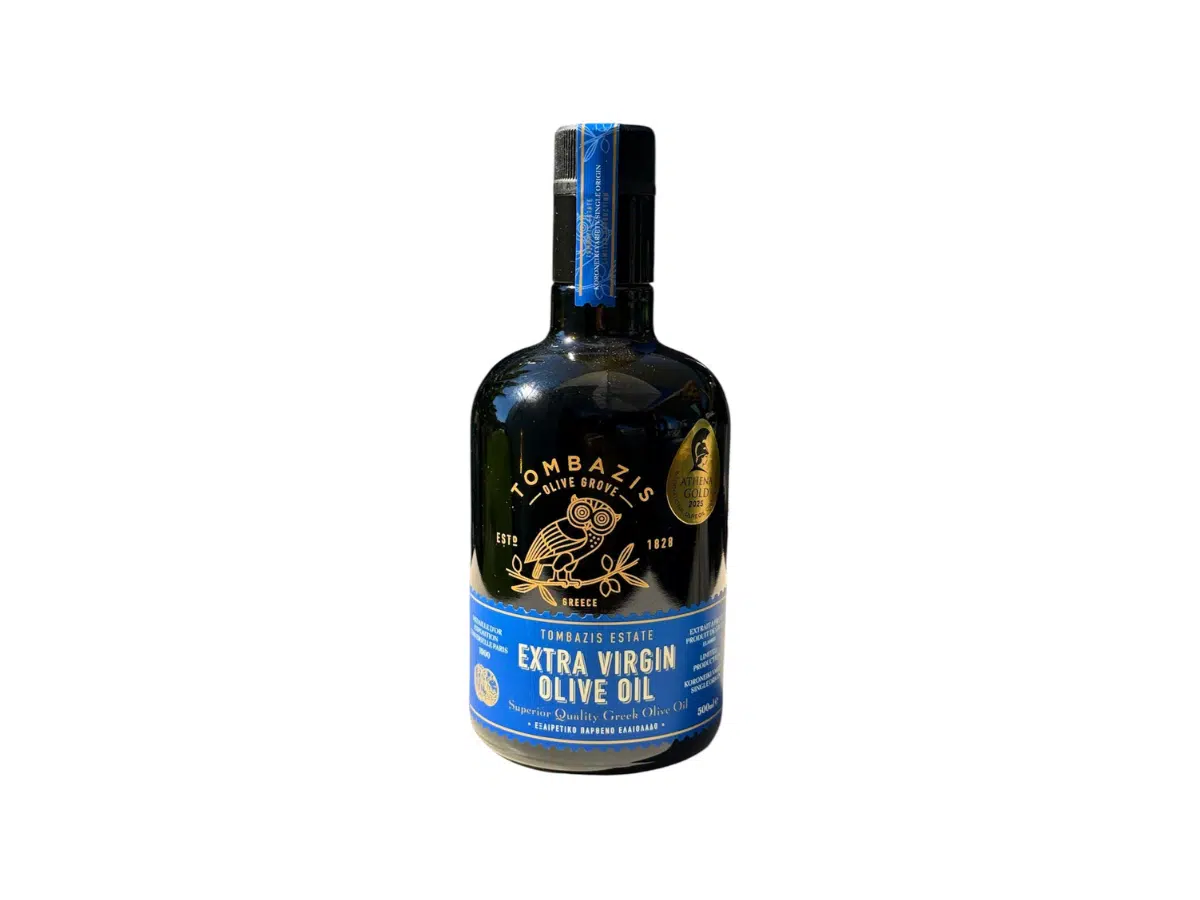
Final packaging has a major influence on the quality of an olive oil. It protects the work done at the mill and prolongs the product’s freshness. Tombazis’ 100 ml and 500 ml dark glass bottles fulfill this role with precision. Their Guala tamper-proof caps ensure a stable closure and prevent air from entering. As a result, peroxidation progresses very slowly. Technical analyses of Tombazis olive oil confirm this long-term stability.
Tinted glass then reinforces this protection. It filters out most of the UV rays that degrade pigments and aromas. This choice preserves chlorophylls, carotenoids and aromatic clarity. Even in direct sunlight, the oil retains its intensity and balance. This resistance also prolongs the sensory freshness observed in the technical analyses of Tombazis olive oil.
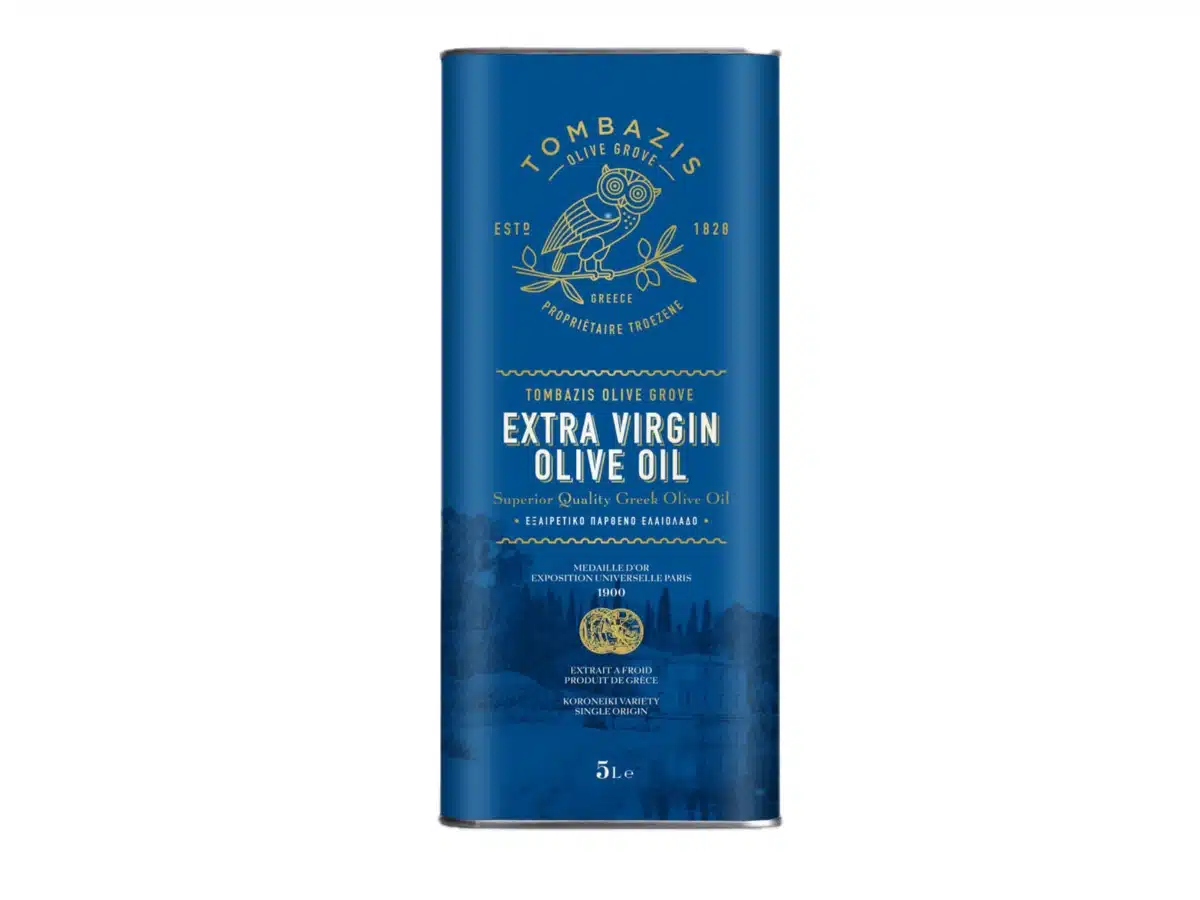
At the same time, the domain offers a 5 L opaque canister. This format meets the needs of chefs, culinary workshops and families. It protects the oil from light and prevents unwanted migration. The practical tap limits exposure to air and facilitates daily use. This choice provides economical access to quality bulk oil, without reducing the analytical stability obtained during pressing.
In the end, every detail of the packaging is aimed in the same direction: to protect the product’s aromatic and phenolic structure. Tombazis thus guarantees an oil that reaches the consumer with an intact profile, faithful to the data revealed by the technical analyses of Tombazis olive oil.
Logistics designed for freshness
At Tombazis, bottling is never an industrial operation: it’s a vintage operation, carried out on demand, within a strict timeframe of no more than ten days after order validation. This approach, often reserved for highly specialized estates, ensures that each unit leaves the mill as close as possible to its qualitative peak, without lengthy immobilization in the bottle, one of the main causes of aromatic fatigue in top-of-the-range oils.
This “cuvée” operation, where only what will actually be shipped is packaged, drastically reduces exposure to the variations in light and temperature encountered in conventional warehouses. It also ensures continuous batch rotation, an essential element in maintaining analytical consistency from one shipment to the next.
From a logistical point of view, the information supplied by the producer shows an unusually precise approach: controlled gross weight, standardized volumes, compact cartons, densified pallets. These choices, far from being anecdotal, improve the thermal stability of the product in transit. Tight packaging limits heat diffusion, reduces temperature micro-variations and preserves the integrity of sensitive phenolic compounds.
In this way, the entire chain, from inert storage to rapid bottling and optimized packaging, forms a coherent continuum. Each batch of Tombazis travels under conditions close to those required for competition oils, guaranteeing that the oil tasted by the end customer faithfully reflects the quality measured in the laboratory.
Culinary versatility - the ally of chefs and gourmets
Olive oil for precision gastronomy
The aromatic structure of Tombazis extra-virgin oil is ideally suited to cuisines seeking precision and finesse. Its green fruitiness remains clear and energetic. The bitterness, clean but poised, balances with a frank spiciness that develops in the throat. Together, these sensations create a solid base that respects delicate dishes without overpowering them. Technical analyses of Tombazis olive oil confirm this consistency.
As a seasoning, the oil shows great finesse. A drizzle over steamed vegetables enhances the texture without altering it. On a herb salad or gently cooked white fish, it adds a fresh touch. It also works well with sea bream carpaccio, creamy burrata or zucchini tartar. On fresh cheeses, it adds a distinct vegetal note reminiscent of olive leaf, raw artichoke and green apple.
Thanks to this clarity of taste, the oil naturally interacts with contemporary kitchens. These kitchens seek straightforward expression, aromatic verticality and constant freshness. In restaurants where every detail counts, it serves as both an aromatic support and a culinary trademark. Its consistency, also visible in the technical analyses of Tombazis olive oil, reinforces its appeal to chefs who work with precision.
Stability in gentle baking and warm application
Although designed primarily for raw use, Tombazis olive oil is surprisingly resilient to mild heat, a quality rarely associated with early-harvest Koroneiki. Its oxidation parameters, K232 at 1.793 and K268 at 0.189, both well below COI thresholds, confirm its solid molecular stability, a direct consequence of its rich polyphenol content and the rigor of its post-harvest process.
This robustness enables it to accompany preparations heated with care, up to 120-130°C, without losing its aromatic architecture or compromising the presence of its bioactive compounds. In gentle cooking, it brings a silky texture and an elegant vegetal touch to pan-fried vegetables, simmered legumes or cereals cooked at a very low heat, where heat is not intended to heighten flavors, but to round them out.
In a gastronomic context, this controlled tolerance of heat opens up a field of subtle uses: finishing a hot purée, seasoning a velouté just before serving, or assembling a warm herb sauce without risking aromatic fatigue. It is precisely in these creamy, subdued registers that Tombazis demonstrates its versatility, shaped not to withstand everything, but to intelligently accompany everything.
Functional role in health plans
Total biophenol content exceeds 330 mg/kg by HPLC method. As a result, the oil clearly exceeds the threshold of Regulation (EU) 432/2012. As a result, it qualifies for the health claim linked to the protection of blood lipids. This goes far beyond a simple administrative rule, as it places Tombazis in the category of functional oils. Indeed, nutritionists and prevention professionals seek out this type of profile for its effectiveness. Technical analyses of Tombazis olive oil confirm this solidity.
In this context, the oil fits in very well with dietary approaches focused on anti-inflammation or tension management. It also adapts well to models inspired by the Mediterranean diet. What’s more, its phenolic density offers rare stability, even in delicate recipes. It blends easily into a green smoothie. It also enhances a precise vinaigrette or accompanies a post-operative meal requiring a good antioxidant intake.
This oil is also suitable for kitchens looking for a mild vegetal touch. It combines clean bitterness, clear fruitiness and stable aromatics. Thanks to this balance, it acts as an active ingredient while remaining a reliable sensory vehicle. It also enhances the nutritional value of a dish without altering its flavor. It is precisely this harmony between taste finesse and biochemical efficacy that sets Tombazis apart from conventional extra-virgin products.
For use in fine dining and premium grocery stores
Tombazis oil’s clarity of taste, supported by a highly consistent analytical profile, sets it apart in the world of high-level gastronomy. Its clean, stable and instantly recognizable sensory structure meets the expectations of Michelin-starred chefs, olive oil sommeliers and delicatessens looking for products that combine technical precision with a strong identity.
This consistency allows it to be integrated without hesitation into signature menus, where aromatic consistency must be irreproachable from one service to the next. It is also becoming a preferred medium for tasting workshops, where its aromatic purity and phenolic construction make it an excellent teaching tool to explain the notion of green fruitiness, controlled bitterness or oleocanthalic spiciness.
Finally, its analytical, certified, stable and documented positioning makes it ideal for top-of-the-range gourmet boxes, particularly those focusing on health, terroir or Mediterranean cuisine. Tombazis presents itself not only as an exceptional oil, but also as a product capable of embodying a culture, a territory and a rigorous production method.
An Oil Ready to Conquer Premium Markets
Strong positioning in highly standardized markets
Thanks to its European organic certification, exhaustive technical analyses and fully validated health claim, Tombazis extra virgin olive oil meets all the criteria required by the most selective international markets. Its clear organoleptic profile, proven oxidative stability and impeccable documentary traceability make it a product that immediately complies with the reinforced import protocols of Germany, the Nordic countries and Switzerland.
Clear, standardized multilingual labelling, adapted to local regulations, reinforces this export capability. Tombazis thus offers all the guarantees sought by premium distributors: an oil that is technically legible, certified and controlled, and capable of supporting a top-of-the-range positioning on the Japanese or Scandinavian markets, where documentary and sensory requirements reach their highest level.
Greater credibility with specialist importers
The certificate of analysis issued by BioHellas, including polyphenol concentrations, oleic acid content and oxidation markers K232 and K268, provides additional legitimacy for Tombazis cuvée in professional tenders. These documents, written in English and structured according to the standards expected by international distributors, constitute a veritable technical passport. They enable B2B buyers, whether organic retail chains, clinical nutrition platforms or specialized importers, to check product conformity quickly and reliably.
Thanks to this analytical transparency, Tombazis is clearly in the category of premium extra virgin oils capable of meeting the most stringent specifications, both in Europe and outside the EU market.
A differentiating tool for restaurateurs and retailers
Tombazis extra virgin olive oil is a natural choice for gourmet restaurants, as it supports precise, consistent cooking. Its clear aromatic profile, combined with well-documented stability, helps chefs build a solid discourse. This makes it easier for them to link terroir, extraction and biochemical rigor. Technical analyses of Tombazis olive oil further reinforce this credibility.
What’s more, this technical clarity fuels clear storytelling. It helps both in the dining room and during tasting workshops. It also facilitates oil and food pairings in high-end restaurants, enhancing the customer experience.
In specialized stores, Tombazis oil meets the expectations of a well-informed clientele. It offers a premium product, certified organic, with verifiable analytical values and full traceability. Thanks to this combination, the positioning remains strong and clear. The controlled origin, clear process and sensory excellence form a rare combination on the market.
Finally, for a fine grocer, gourmet wine merchant or health-oriented retailer, Tombazis is more than just a quality oil. It becomes a benchmark capable of anchoring a department and reassuring a demanding customer. It also enhances the image of the sales outlet, as it combines technical precision, aromatic consistency and nutritional value.
Professional recognition under construction
Although Tombazis does not yet feature in the rankings of the major international competitions, NYIOOC, BIOL, AVPA Paris or London IOOC, its analytical profile clearly places it among the oils likely to perform well there.
Contemporary juries, who now pay close attention to phenolic density, aromatic purity and documented environmental commitments, are looking for exactly what this Galatás cuvée offers: an oil that is technically legible, consistent from orchard to tasting, and backed by rigorous certification.
With this in mind, Tombazis is already part of the new generation of sustainable nutrition-oriented oils, those that combine sensory excellence with scientific legitimacy. Competitions such as the Olympia Health & Nutrition Awards, where the biochemical dimension is assessed with as much attention as the sensory profile, or theOlive Japan, renowned for its strictness in terms of aromatic balance, are natural breeding grounds for this type of product.
Should the brand choose to compete, its characteristics – low yield, impeccable extraction, oxidative stability and high phenolic value – would correspond to the standards expected by these demanding panels.
FAQ - Frequently asked questions about Tombazis olive oil
What are the benefits of polyphenol-rich olive oil?
Polyphenol-rich olive oil boasts powerful antioxidant properties. These bioactive compounds protect blood lipids against oxidative stress, reduce inflammation and help prevent cardiovascular disease. They also help slow cellular aging, thanks to their ability to neutralize free radicals. Oleocanthal, for example, is recognized for its anti-inflammatory action, comparable to that of ibuprofen in low doses.
How to recognize a quality extra virgin olive oil?
A quality extra virgin olive oil is distinguished by several criteria: acidity below 0.8%, cold extraction (≤ 27°C), total absence of sensory defects (rancidity, fermentation…), and a precise organoleptic profile (fruity, bitter, spicy). In a blind taste test, it should give off aromas of cut grass, green tomato or artichoke. Finally, good labelling, clear traceability and available chemical analyses reinforce its credibility.
Can olive oil retain its properties when cooked?
Yes, as long as temperatures are not too high. Olive oils rich in polyphenols and oleic acid (monounsaturated) remain stable up to 160-170°C, and even 180°C in some cases. This makes them ideal for gentle cooking, stir-frying or simmering. Beyond that point, volatile compounds may break down, but the oil remains more stable than many other vegetable oils.
Why do some olive oils sting in the throat?
What is a health claim for olive oil?