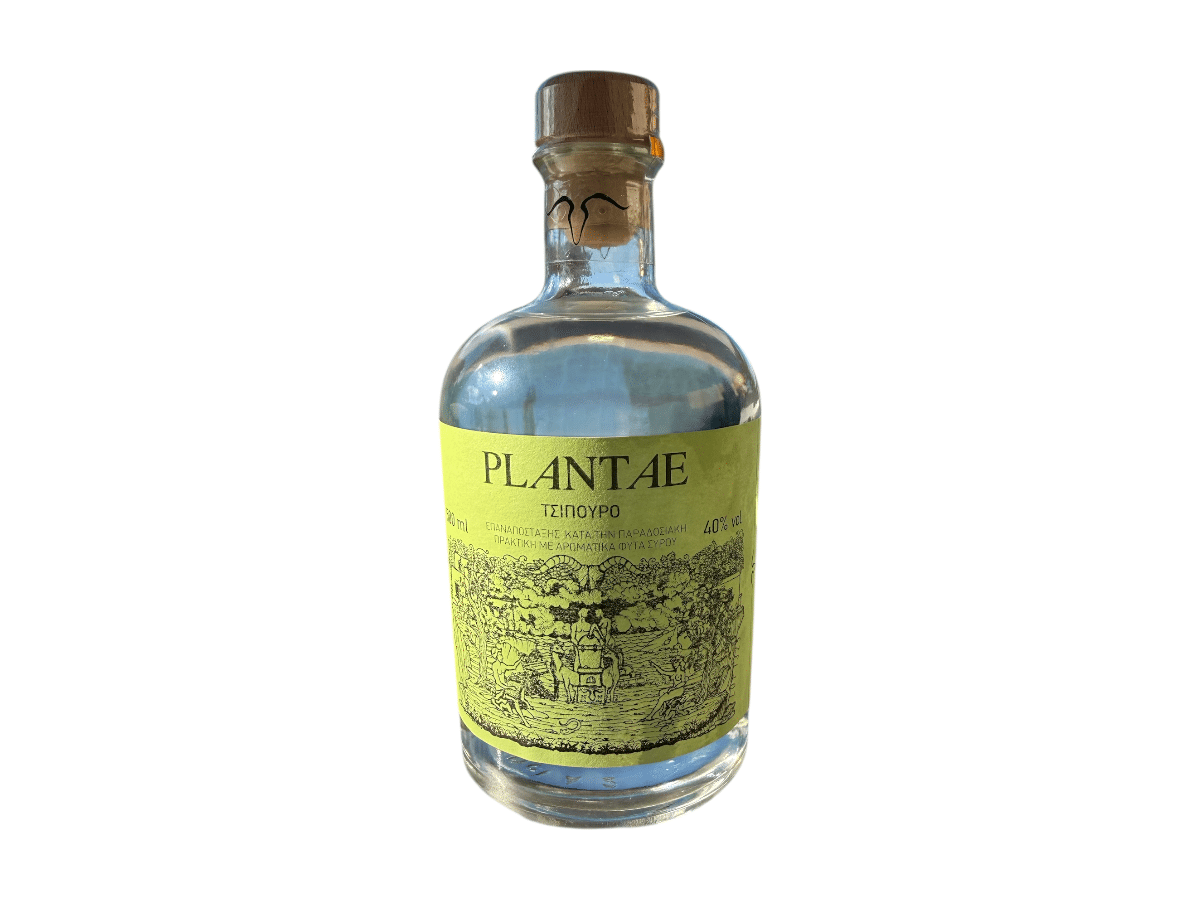
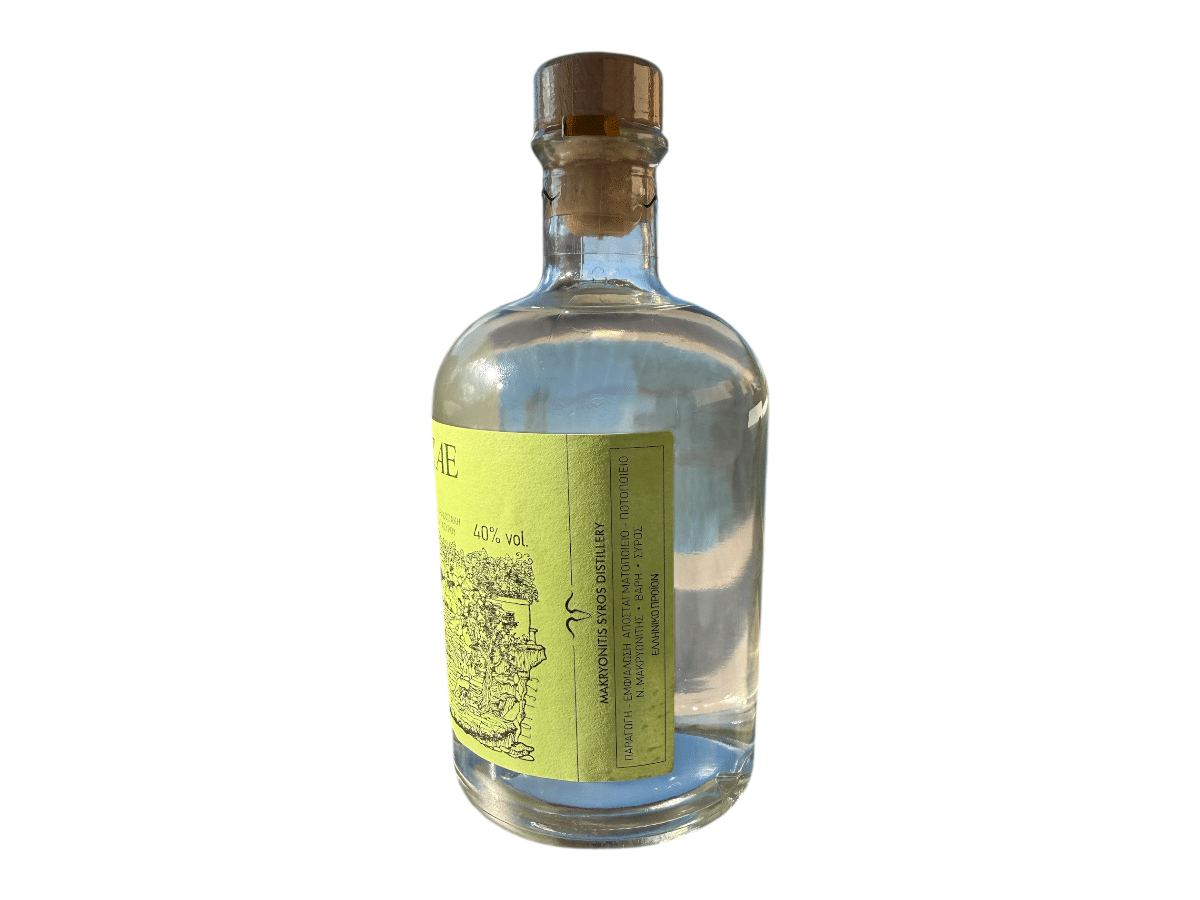
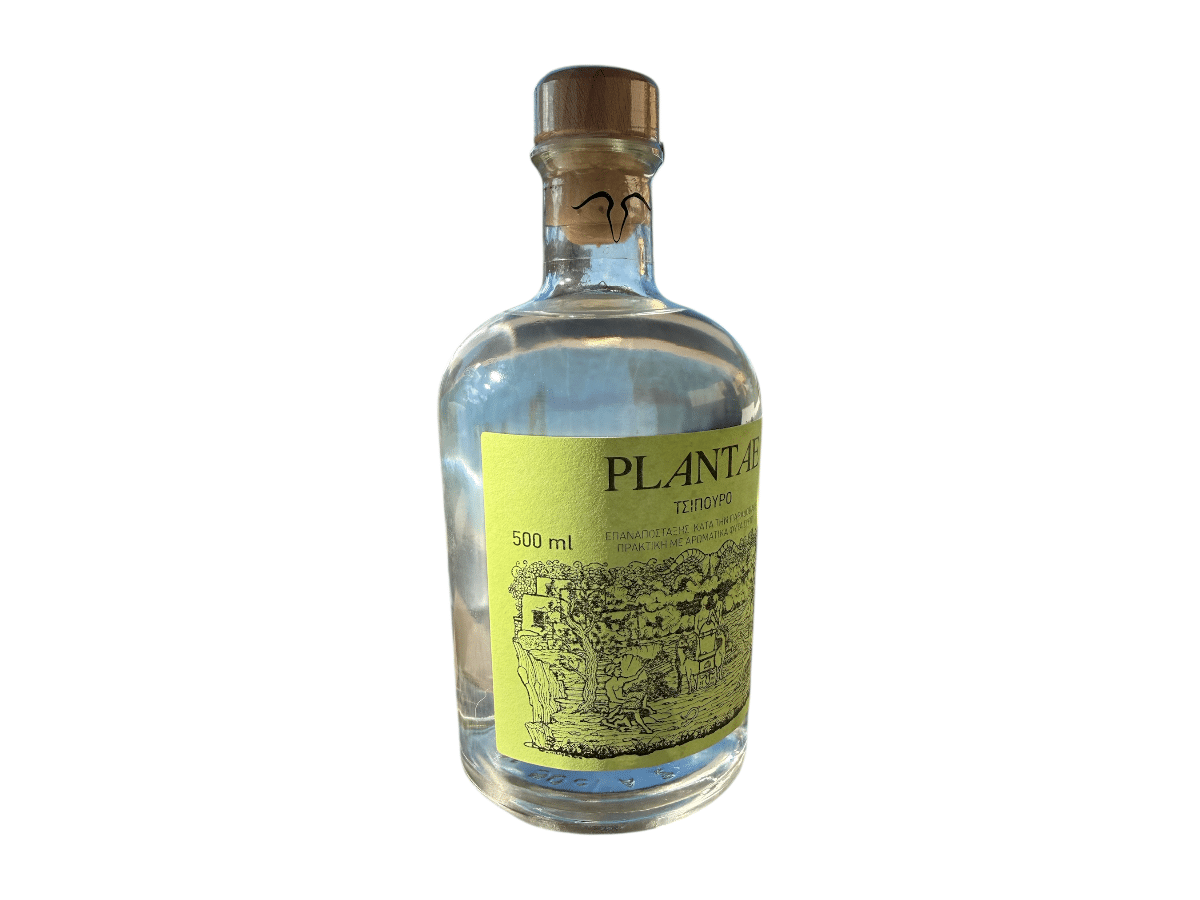













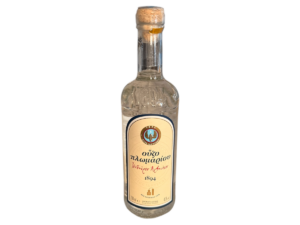
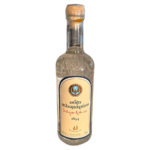
With Plantae, the Makryonitis distillery offers a Greek botanical tsipouro that differs from classic expressions. It is directly inspired by Cycladic recipes, in which local plants and spices play a central role.
First, the producer creates a fine tsipouro, designed as a precise base. Then he enriches it with local herbs and spices, to create a controlled aromatic profile.
To refine the expression of this Greek botanical tsipouro, the producer opts for double distillation. This enhances the purity of the distillate and clarifies the aromas.
In this way, the vegetal notes express themselves more clearly. The whole gains in balance and aromatic clarity.
A herbaceous profile with delicate notes
Plantae’s character gives it a pronounced herbaceous profile. First, local plants bring freshness and depth. Then, notes of mastic and citrus complete the ensemble.
As a result, this Greek botanical tsipouro offers notable aromatic intensity, while retaining great finesse. Flavors remain clean and well-defined.
With an alcohol content of 40% vol., this Greek botanical creation fully expresses its aromatic richness. However, the intensity remains balanced thanks to the distillation process and the selection of plants.
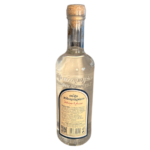
Available in 500 ml bottles, Plantae is aimed at connoisseurs of original spirits, looking for a different tsipouro experience.
A botanical tsipouro is a tsipouro enriched with plants and spices. As a result, it develops a more herbal aromatic profile than classic tsipouro.
Classical tsipouro features mainly grapes. By contrast, Greek botanical tsipouro incorporates herbs and spices, adding aromatic complexity.
No. However, some botanical aromas are reminiscent of the world of gin. For example, a Greek botanical spirit retains a tsipouro base, without becoming a gin.
In general, the taste remains herbaceous and balanced. Herbal, mastic and citrus notes add freshness and intensity.
Both uses exist. However, many people prefer to consume this type of pure botanical Greek tsipouro, to take full advantage of its botanical character.
| Weight | 0,927 kg |
|---|---|
| Dimensions | 9 × 9 × 19 cm |
| Conservation | Store in a cool, dry place |
| Contenant | Glass bottle |
| Couleur | Clear |
| Ingrédients / composition | Coming soon |
| Région | Aegean |
Only logged in customers who have purchased this product may leave a review.



 Experiences
 Accessories
 Beverages


Reviews
There are no reviews yet.